Black Tents
The fabric closes itself when it rains — yak hair swells against its neighbours, and a loose weave becomes a tight roof.
Woven from yak hair, the cloth swells when wet and closes its own weave, so a loose fabric becomes a rainproof roof.
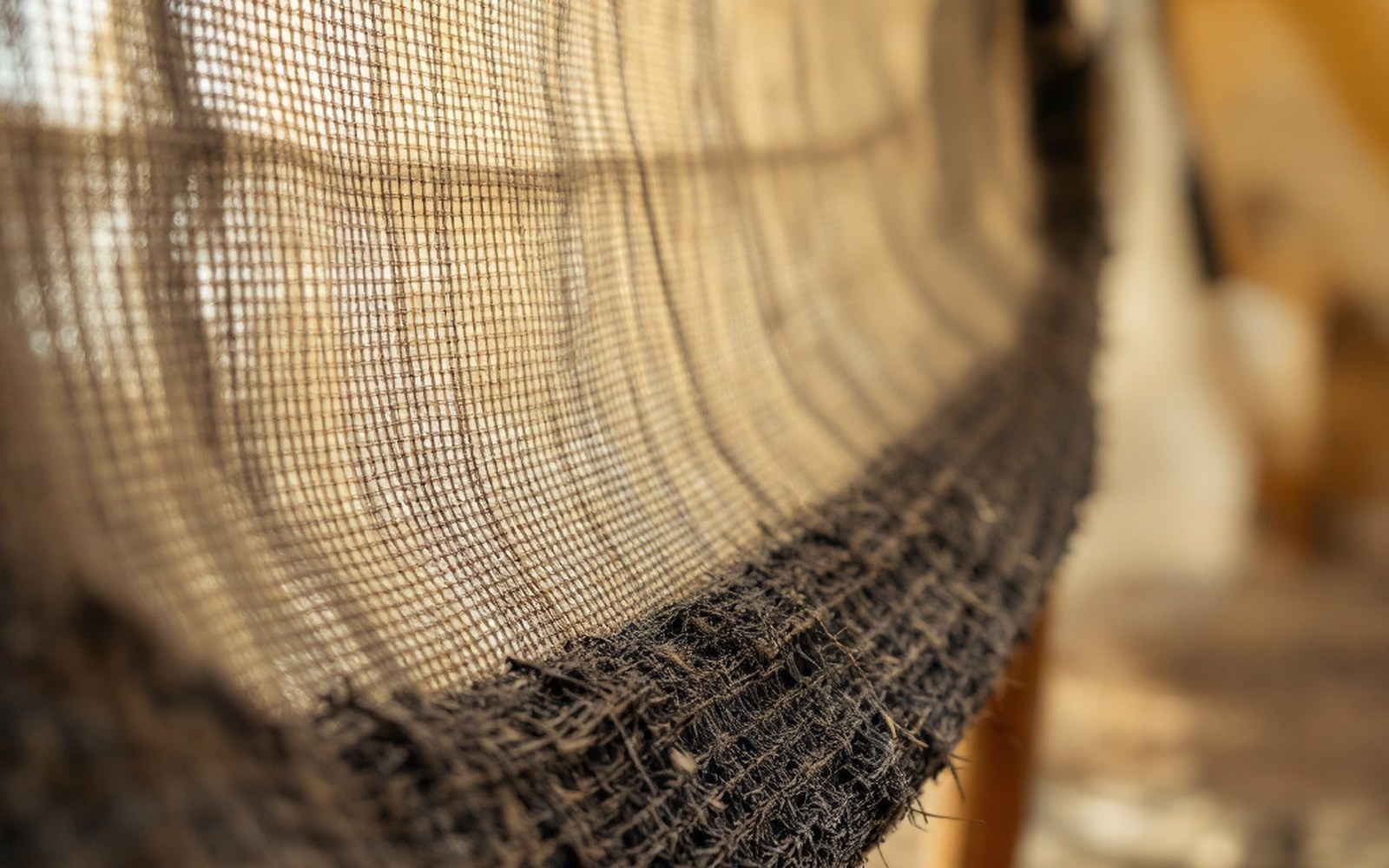
Yak guard hair (khulu): long, coarse outer coat; spun into heavy yarn for weavingProTibet picture library
01What the Cloth Is
The black tent of the Tibetan plateau is not made of hide or felt.
It is woven — a plain-weave cloth of coarse yak hair, dark enough from the natural colour of the fibre that it absorbs heat from a thin-atmosphere sun, and open enough in its dry state to breathe. That last quality is not a flaw. When rain falls, each hair shaft swells along its length and presses against adjacent fibres, effectively closing the interstices. The fabric becomes, for the duration of the wet, a serviceable roof. When it dries, the weave relaxes again, ventilating the interior. No coating, no treatment, no applied waterproofing: the structure of the fibre is the technology.
The hair comes from the outer coat of the domestic yak — the long, coarse guard hair called khulu — rather than the soft underdown (the fine fibre grown close to the skin) reserved for finer textiles.
Guard hairs run to thirty centimetres or more and are spun into a thick, strong yarn. Women on the Chang Tang do most of the spinning; the woven strips, typically thirty to forty centimetres wide, are produced on ground looms and then sewn together into panels. A full tent roof requires many strips and many months of cumulative labour. A single tent can weigh well over a hundred kilograms once assembled, which is a significant load for the yak that carries it between seasonal camps.
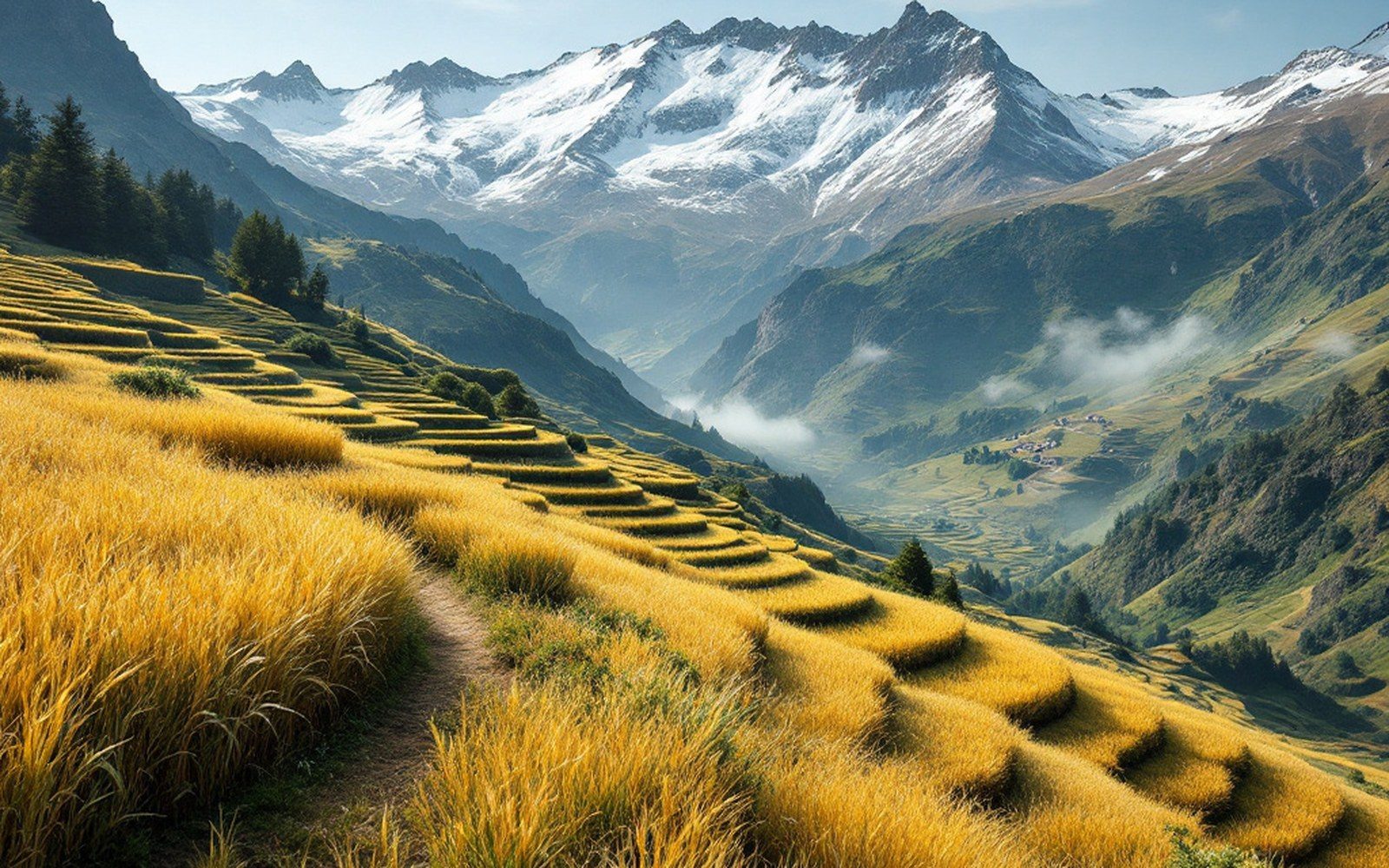
Barley ripens higher than any other cereal, and the altitude at which it stops is the altitude at which settled farming stops. Read the entryProTibet picture library
02Drokpa and the Annual Cycle
The people who live in black tents are the drokpa — the nomadic herding communities of the high plateau, distinct in livelihood and material culture from the farming villages of the lower valleys.
Their annual movement follows pasture, not roads: up to high summer ground when snow retreats, back to sheltered winter valleys when it returns. The tent is the fixed architecture of this mobility. It is designed to be raised by two people with no tool other than their hands, tensioned by guy ropes pegged into ground that is sometimes frozen, and struck in under an hour.
Interior plan is consistent across the Chang Tang and into the Kailash range region: a central hearth with a smoke hole above it, formed by adjusting the tension of the roof panels rather than by any rigid structure.
The hearth burns dried yak dung — the plateau's dominant fuel, collected, dried and stacked through summer precisely because wood is absent. Hearth position divides the tent's social space. The floor is bare earth covered with woven mats, yak-hair blankets and the folded chuba (the heavy wrap-around robe) that serves as bedding.
Key materials and their logic
| Yak guard hair (khulu) | long, coarse outer coat; spun into heavy yarn for weaving |
| Plain-weave cloth | open dry, self-sealing when wet; no waterproofing additive needed |
| Yak dung | main fuel at altitude; collected and dried through summer |
| Woven mats, folded chuba | floor covering and bedding, all textile-based |
03Dimensions and Limits
A working tent for a family runs roughly eight to twelve metres along its main axis, though the form is not standardised in the way a timber building is.
Size is adjusted by the number of sewn strips. The roof is not pitched but roughly horizontal, held between a central ridge pole or ridge rope and the perimeter guys, with a slight droop between support points that encourages rain to run toward the edges rather than pool. The smoke hole is the only aperture above the wall line; light enters under the lifted skirts of the roof when weather allows.
The cloth does not last indefinitely. Weaving new strips is continuous seasonal labour, and a tent is repaired and rebuilt strip by strip rather than replaced wholesale. Older fabric from the less-exposed lower panels may be reused as bags, ground covers or additional insulation. Nothing in the material economy of the drokpa assumes disposal; the tent is maintained the way a tool is maintained, extended rather than discarded.
The tent as a building type appears in early documentation of plateau nomadism, and its essential form — woven yak hair, open weave, self-sealing when wet — has not been superseded by any other material that combines the same weight, packability, thermal mass, and renewable local supply. At four thousand metres, where timber does not grow and stone cannot be moved seasonally, the loom is the construction site.

Roasted barley flour keeps, needs no cooking and can be eaten anywhere, which is why it is the staple rather than bread. Read the entryProTibet picture library
Dimensions to set apart
- Strip width: typically 30–40 cm per woven panel
- Tent length: roughly 8–12 m along main axis for a family tent
- Weight: can exceed 100 kg fully assembled
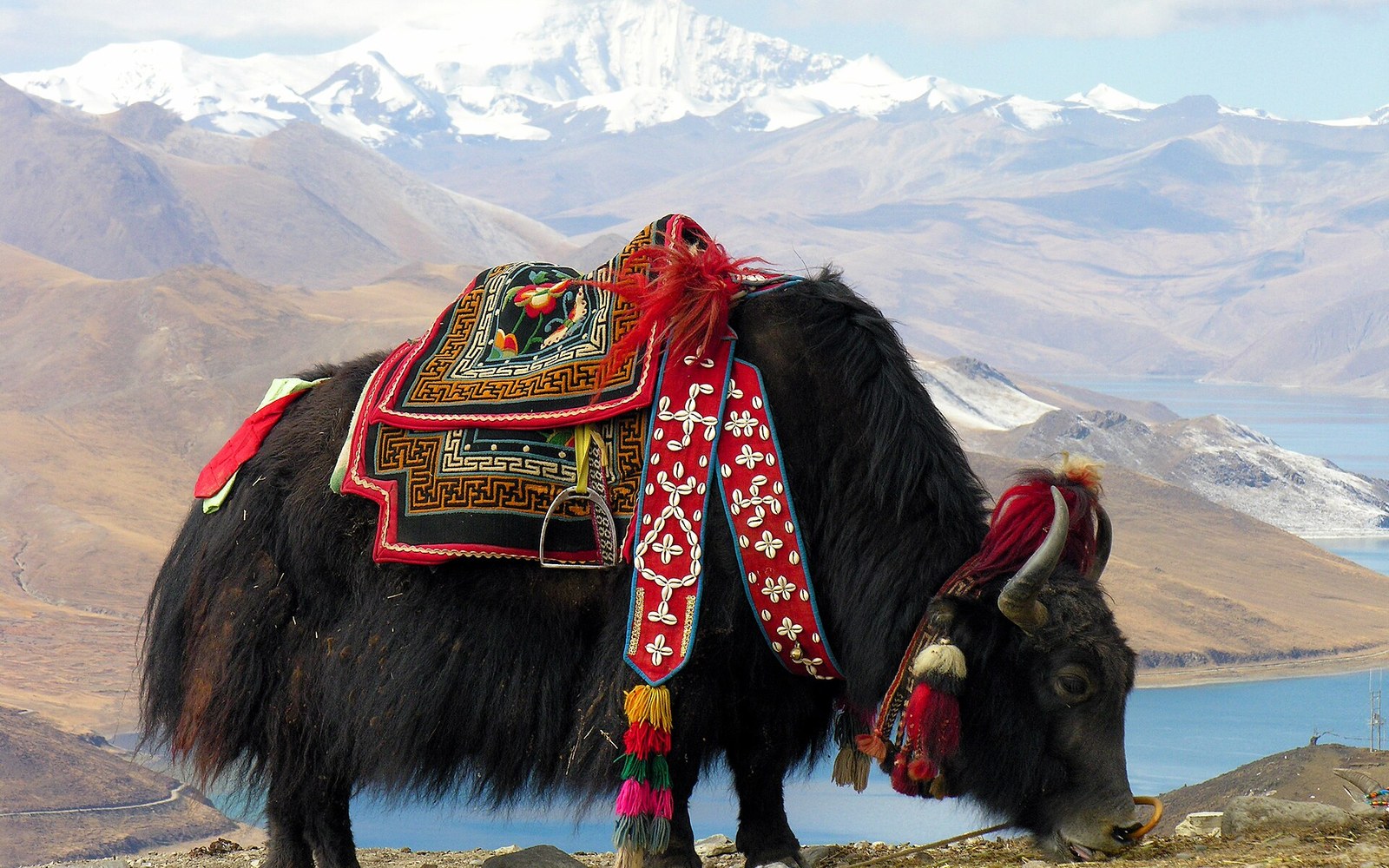
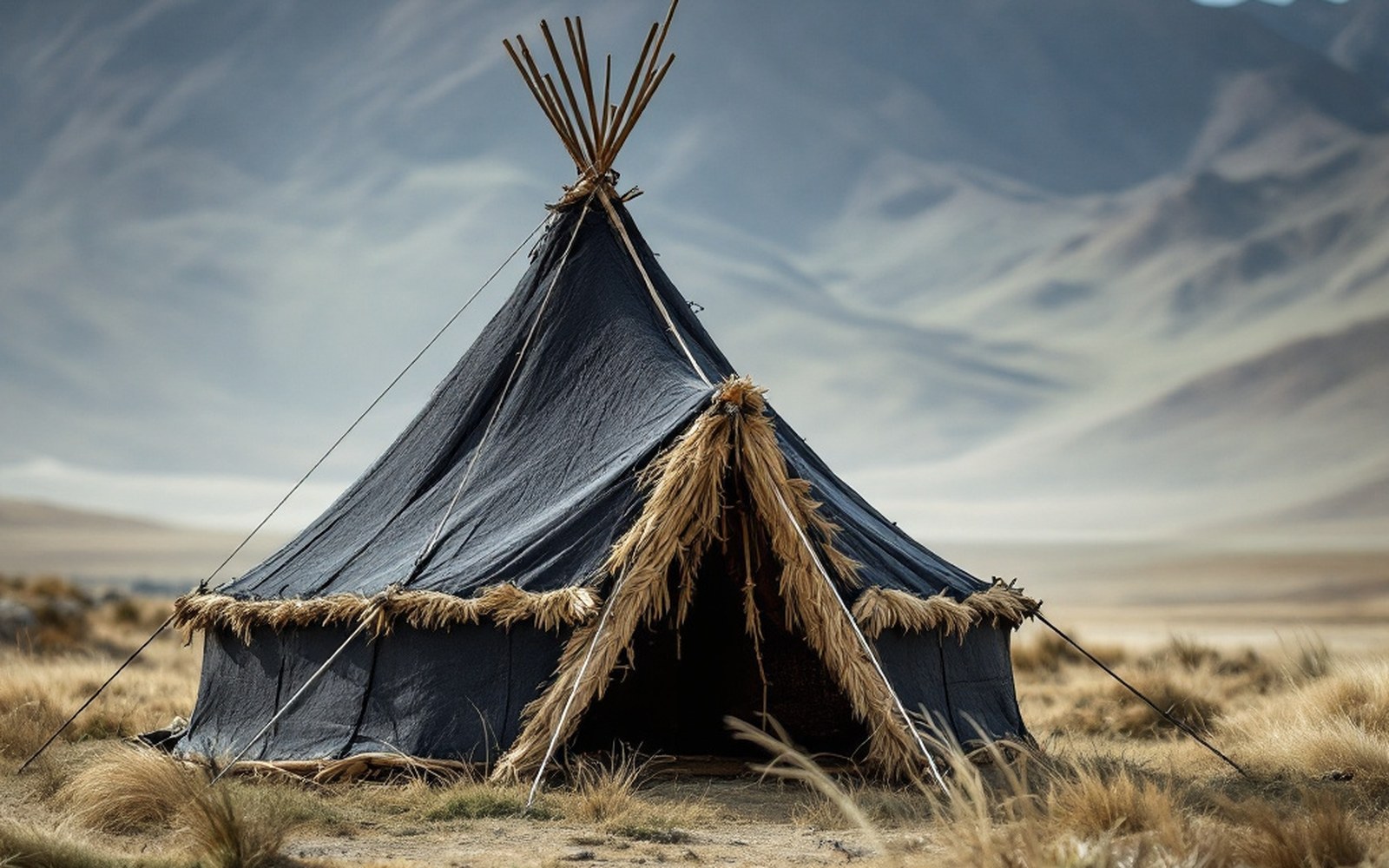
Yak-hair cloth swells when wet and closes its own weave, so a loose fabric becomes a rainproof roof.ProTibet picture library