The Measured Grid
Before a single pigment touches the ground, a Tibetan painted figure is a geometry problem — proportions fixed by rule and counted in finger-widths, leaving the painter almost nothing to decide by eye alone.
A painted figure is set out on a ruled proportional grid before any colour is laid, so the drawing is a measurement rather than a sketch.
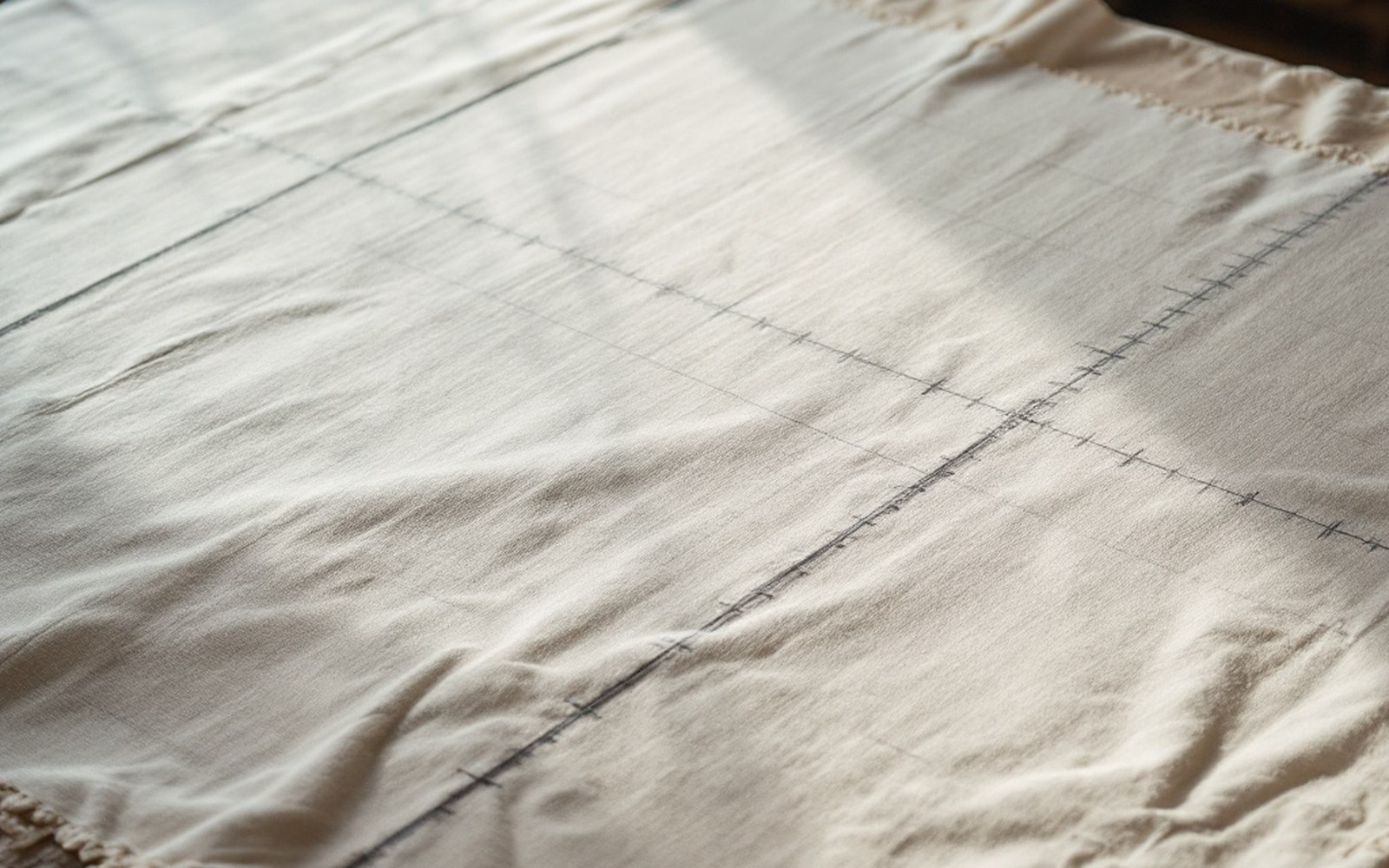
120 sor: total height of a standing principal figure, crown to soleProTibet picture library
01The Grid as Scaffold
Thangka painting begins not with colour but with chalk and a ruled line.
The support — cotton cloth sized with a chalk-and-hide-glue ground — is stretched taut on a frame, and the painter draws a grid across it before placing any figure. The units of that grid are sor, finger-widths, and the body of a principal deity is typically set out at 120 sor from the crown of the head to the sole of the foot. That number is not arbitrary: it descends from a canonical system of proportion codified in Tibetan treatises on sacred image-making, the most important of which is the Tsedru Mentsi tradition, which correlates facial features, limb lengths and posture angles with fixed integer multiples of the base unit. The painter's first task is to count, not to see.
The grid is drawn lightly with charcoal or a chalk-loaded string snapped against the cloth, producing a fine line that will be covered by pigment later or simply disappear under the paint layer.
Horizontal and vertical divisions are numbered from a baseline, usually the sole of the foot, and the canonical text specifies which grid intersection falls at the navel, the chin, the inner corner of the eye, the tip of the nose. The figures in Tibetan thangka paintings held in major museum collections show, when X-rayed or examined in raking light, the ghost of this understructure: parallel lines at regular intervals, and a central vertical axis that the figure never departs from.
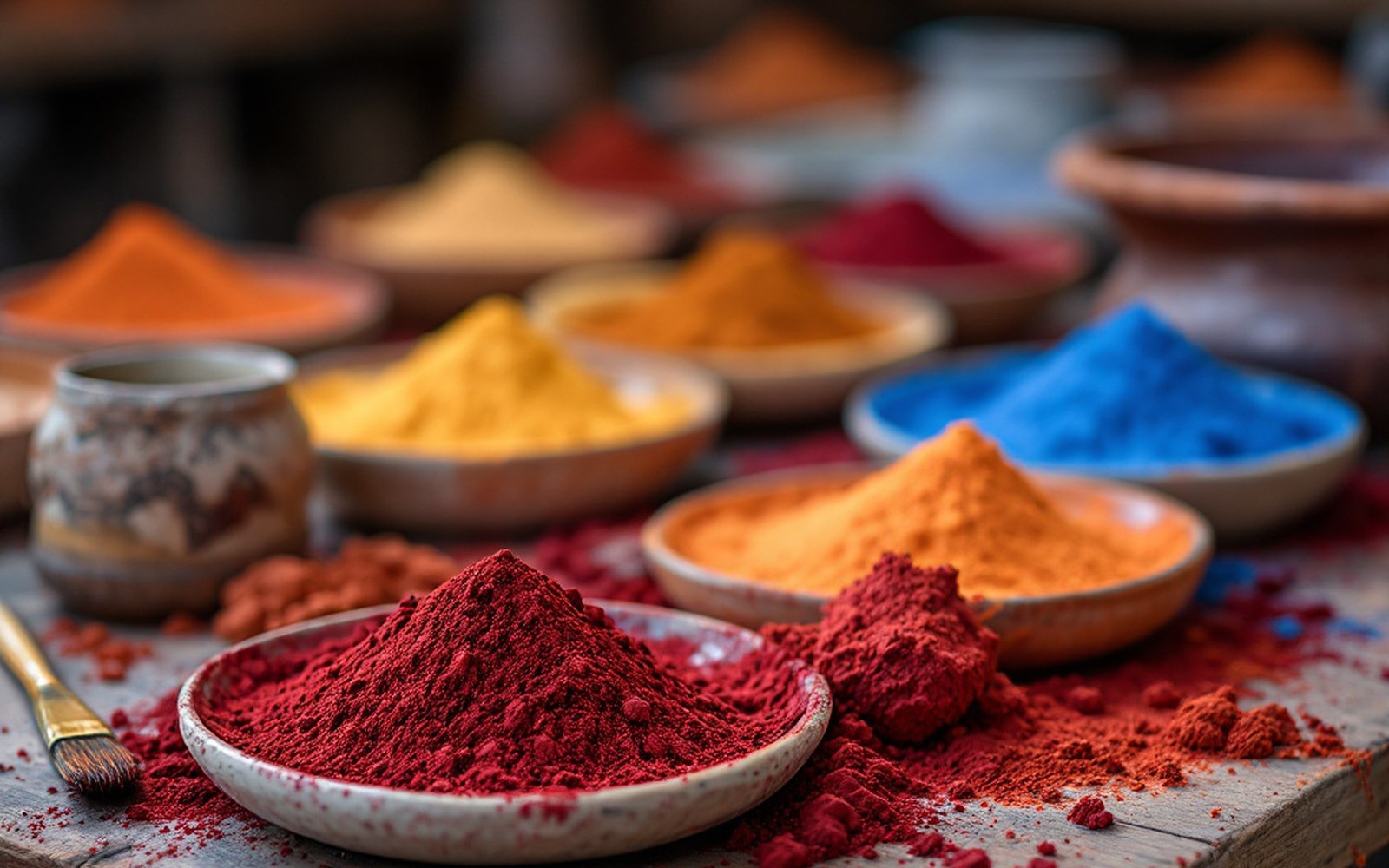
Ground azurite, malachite, cinnabar and orpiment, bound in animal glue — the colours are stones before they are paint. Read the entryProTibet picture library
The system is not pan-Asian; it is specifically Tibetan, though it shares ancestry with Indian mānasāra systems of iconometric proportion, which set the standard for deity images across the subcontinent.
Tibetan painters absorbed those Indian precedents and then formalised them further, writing them down in works that circulated as block-printed manuals alongside the broader woodblock-printed textual culture. The result is a tradition in which two painters trained in the same school, working in different monasteries a century apart, will place the eye of Avalokiteśvara — the bodhisattva known in Tibetan as Chenrezig — at precisely the same sor-count above the baseline.
02How the Numbers Run
The proportional system most widely cited in scholarship is the twelve-sor face, which divides the head from crown to chin into twelve equal units.
Within those twelve units: the hairline falls at ten, the brow-ridge at eight, the base of the nose at four, the mouth division at two and a half. Eyes are each three sor wide, set one sor apart at the bridge. Ears span from the brow-ridge to the base of the nose — exactly four sor, in both height and placement. These are not approximations; they are the figures given in the textual sources and documented in comparative studies of Tibetan iconometry carried out against surviving paintings.
For the full standing figure at 120 sor, the proportions cascade outward: the face is twelve, the neck two, the torso forty-two, the upper arm eighteen, the forearm twelve, the hand eight, the thigh twenty-four, the lower leg twenty, the foot eight. Each of these divisions is counted against the full height of 120. This arithmetic is built to close exactly, and a painter who loses count midway must recalculate from a landmark, not estimate from the eye. The discipline imposed by this method is literal: it means that a figure is correct when the numbers are correct, and no further appeal to aesthetic judgment is necessary or invited.
How the numbers run
| 120 sor | total height of a standing principal figure, crown to sole |
| 12 sor | height of the face, crown to chin (the master unit from which other proportions derive) |
| Hairline at 10 sor; brow-ridge at 8; base of nose at 4; mouth division at 2½ | |
| Each eye: 3 sor wide; eyes separated by 1 sor at the bridge | |
| Seated figure in meditation: typically 90 sor total | |
| The arithmetic must close exactly | a painter who miscounts recalculates from a landmark |
Seated figures, half-figures and wrathful deities compressed into fierce attitudes each have their own canonical ratios, adjusted from the standing norm by known fractions.
A seated figure in meditation is typically set at ninety sor, with the crossing of the legs occupying the lower register that standing figures give to the leg and foot. Figures in three-quarter or frontal positions have separate specifications for foreshortening. None of this is guesswork: the painter is executing a measurement system that the tradition has maintained across centuries and that the surviving corpus of Tibetan painting, catalogued by institutions including the Himalayan Art Resources database, bears out in remarkable consistency.
03From Grid to Surface
Once the grid is down, the outline is drawn in — in Tibet usually in black ink made from carbon or burnt bone, applied with a fine brush.
The outline follows the grid intersections exactly, and only at the level of peripheral detail — the curl of a lotus petal, the flicker of a flame aureole, the curl of an ear — does the painter exercise discretion that is not dictated by the proportional text. Even here, however, established conventions guide the form; a trained Tibetan painter recognises a correctly drawn ear by its conformity to a shape seen in hundreds of prior examples, not by any abstract sense of naturalism.
With the outline complete, colour is laid.
Mineral pigments — ground azurite for blue, malachite for green, cinnabar for red, orpiment for yellow — are each prepared separately, bound in a size made from animal glue, and applied in flat layers beginning with the lightest tones and building toward the dark. The grid, at this stage, has already done its work. The blue of a deity's skin goes inside a line that the grid established, and the painter fills rather than draws. Shading is added last, in washes of darker pigment or in black, and the eyes — the final act of a thangka — are painted in after everything else is complete, sometimes by a senior painter, since the moment is considered the completion of the object.
The ground on which all this sits is typically cotton cloth, sized with a mixture of calcite chalk and hide glue that is burnished smooth with a polished stone.
The burnishing compacts the ground so that the paint layer has a firm, slightly reflective surface. In the oldest surviving examples, from cave caches such as the walled chamber at Dunhuang explored by Aurel Stein and Paul Pelliot in the first decade of the twentieth century, the same gridded construction underlies Tibetan figural images alongside Chinese and Central Asian ones — demonstrating that the iconometric method was in use early enough to appear in the manuscript period, before it was systematised in the block-printed manuals of later centuries.
What the grid ultimately argues is that a Tibetan painted figure is not an act of artistic invention in the Western post-Renaissance sense.
It is a replication — precise, accountable, measurable — of a canonical form that the tradition holds to be correct by definition. The painter's skill lies not in departing from the proportion system but in executing it flawlessly: in the steadiness of the ink line, the evenness of the pigment layer, the accuracy of the count. The grid is both the scaffold and the standard, and the measure of a good painting is, in the most literal sense, whether the numbers come out right.
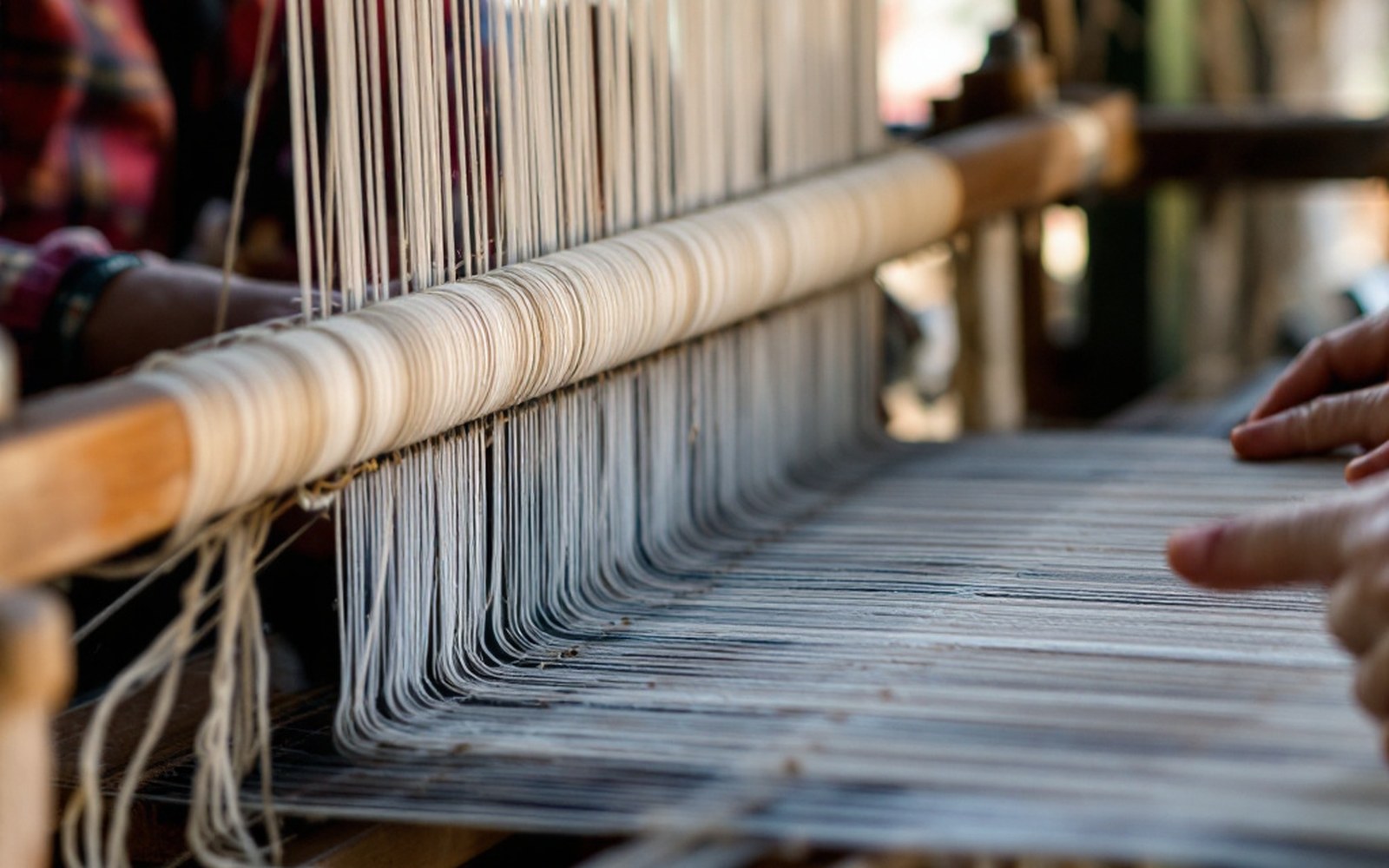
Backstrap and frame looms produce narrow cloth that is joined in strips, which is why the patterning runs the way it does. Read the entryProTibet picture library
Materials at each stage
- Ground: cotton cloth sized with calcite chalk and hide glue, burnished with polished stone
- Grid lines: charcoal or chalk-loaded string snapped against the cloth
- Outline: carbon or burnt-bone black ink, fine brush
- Pigments: azurite (blue), malachite (green), cinnabar (red), orpiment (yellow), each bound in animal glue
- Eyes: painted last, completing the object
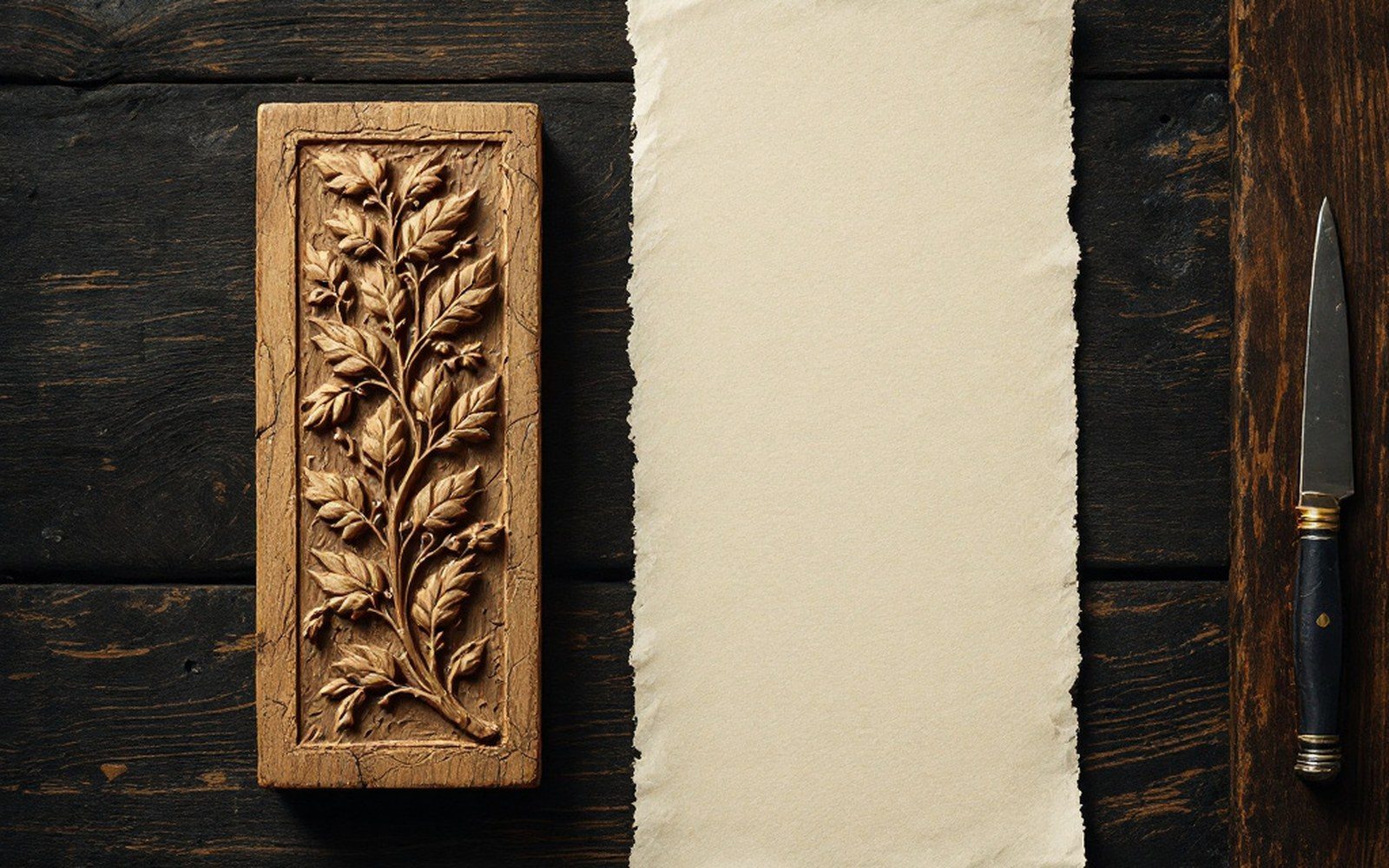
Text was printed from carved blocks onto long loose leaves, one block to a page, and the blocks were kept. Read the entryProTibet picture library
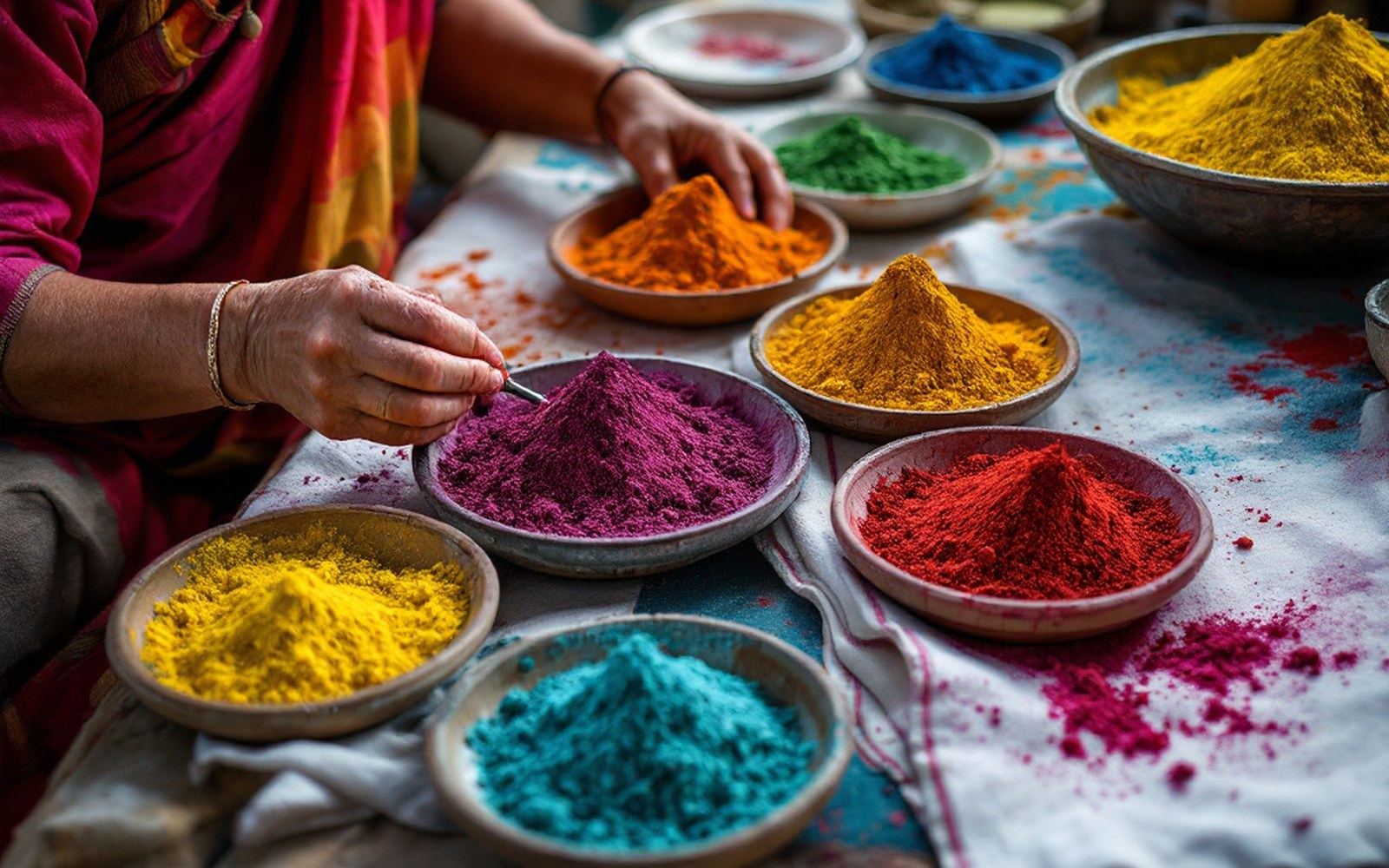
The colours are stones before they are paint — azurite, malachite, cinnabar and orpiment, ground and bound in hide glue.ProTibet picture library