Tsampa
Roasted barley flour that needs no fire, no pot and no ceremony — the grain that altitude made into a carried meal.
Roasted barley flour keeps, needs no cooking and can be eaten anywhere, which is why it is the staple rather than bread.
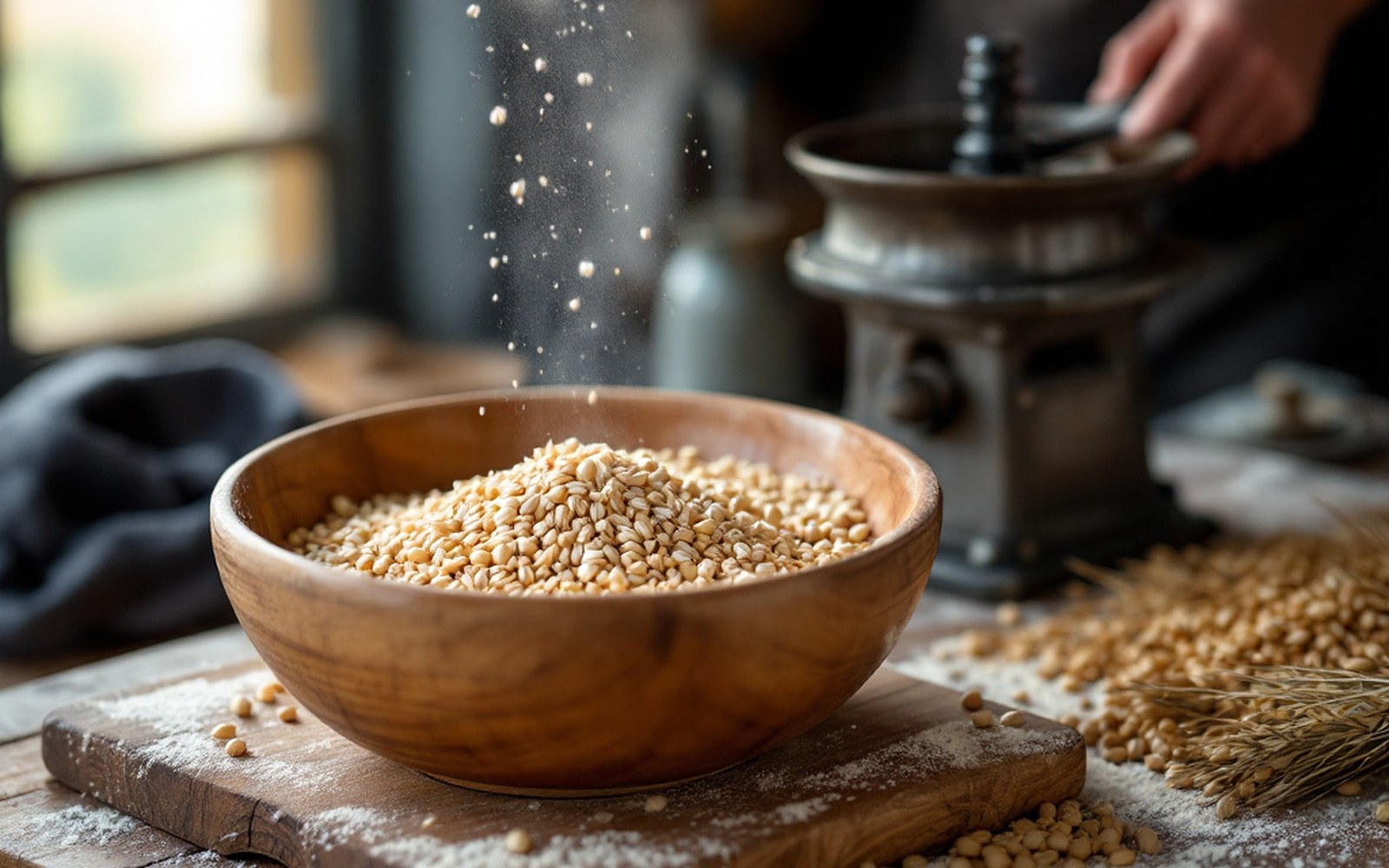
Barley grain dried after harvestProTibet picture library
01The grain and what fire does to it
Barley is the only cereal that reliably ripens above four thousand metres, and across the Yarlung Tsangpo valley and the cultivated terraces of Shigatse and Gyantse it has been the dominant crop for at least three thousand years. The plant is short-strawed, cold-tolerant and fast-maturing — properties that have nothing to do with culinary preference and everything to do with the growing season that altitude allows. Out of that agricultural fact came a food technology so efficient that it has barely changed.
Tsampa is roasted barley flour. The grain is dry-roasted in sand or in an iron pan before milling — a step that gelatinises and then dries the starch, killing the enzymes that would otherwise cause the flour to go rancid. The result is a flour that is already, in effect, cooked. It needs no further heat, no soaking and no leavening. A handful mixed with a little butter tea, kneaded in the bowl of one hand into a stiff dough called pakpe, can be eaten in minutes, anywhere, by anyone carrying a small wooden or leather bowl and a pouch of flour. That portability is not incidental — it is the whole point.

Barley ripens higher than any other cereal, and the altitude at which it stops is the altitude at which settled farming stops. Read the entryProTibet picture library
02What roasting changes
Raw barley flour and tsampa are chemically the same material but behaviourally opposite.
Raw flour requires sustained heat and water to become edible; tsampa requires neither. The roasting step, typically done at relatively low temperatures to avoid scorching, converts resistant starch into a more digestible form and drives off enough moisture to give the flour a shelf life measured in months or years. At altitude, where fuel is scarce — dung-cake fires are carefully rationed, wood is rare, and the yak provides the only reliable combustible — eliminating the cooking step entirely is not a convenience but a material necessity.
The flavour is mild and slightly nutty, with a dry, dense texture that drinking liquid — butter tea, water or, in some areas, chang (barley beer) — corrects.
The fat in butter tea, which is emulsified by the churning, coats the flour particles and makes the kneaded dough cohesive. Without fat, tsampa is dusty and difficult to swallow; with it, the mixture holds together and delivers barley's calories efficiently in cold, high-altitude conditions where the body's demand for energy is high and continuous.
How it is made — sequence
- Barley grain dried after harvest
- Dry-roasted in sand or iron pan (low heat, not scorched)
- Ground at water-mill or hand-mill after roasting
- Stored as flour in leather or wooden containers
- Mixed to order with butter tea or water — no further cooking
03Scale, storage and the drokpa
In the farming valleys, tsampa is made communally or at mill sites where water-driven horizontal millstones process roasted grain in bulk.
The flour is stored in large wooden or leather containers, and households carry it in cloth or leather pouches — a supply for weeks of travel or pastoral movement. Among the drokpa (nomadic pastoralists of the northern plateau), tsampa is the primary traded carbohydrate, acquired from farming communities to the south in exchange for wool, dried meat and salt. The salt-and-grain trade that moved across the plateau's internal routes was, at its core, a mechanism for getting roasted flour to people who lived too high and too far from arable land to grow it themselves.
The grain itself travels well before processing: unhulled barley, once dry, is stable enough that it can be stored for long periods without spoiling. The resilience of the raw grain is only amplified by roasting.
04The bowl as kitchen
What tsampa makes possible is a kitchen that fits inside a wooden bowl.
The Survey of India's pundits, trained to cross the plateau covertly in the 1860s and 1870s, carried tsampa as their primary ration precisely because it asked nothing of their surroundings. Nain Singh Rawat and his colleagues could measure, record and move without stopping to cook. The food matched the landscape: compact, self-sufficient and indifferent to altitude.
That is the real argument for roasted barley flour. Not tradition, not taste, but the thermodynamics of a place where heat is expensive, movement is constant, and the margin between enough and not enough is always narrow.
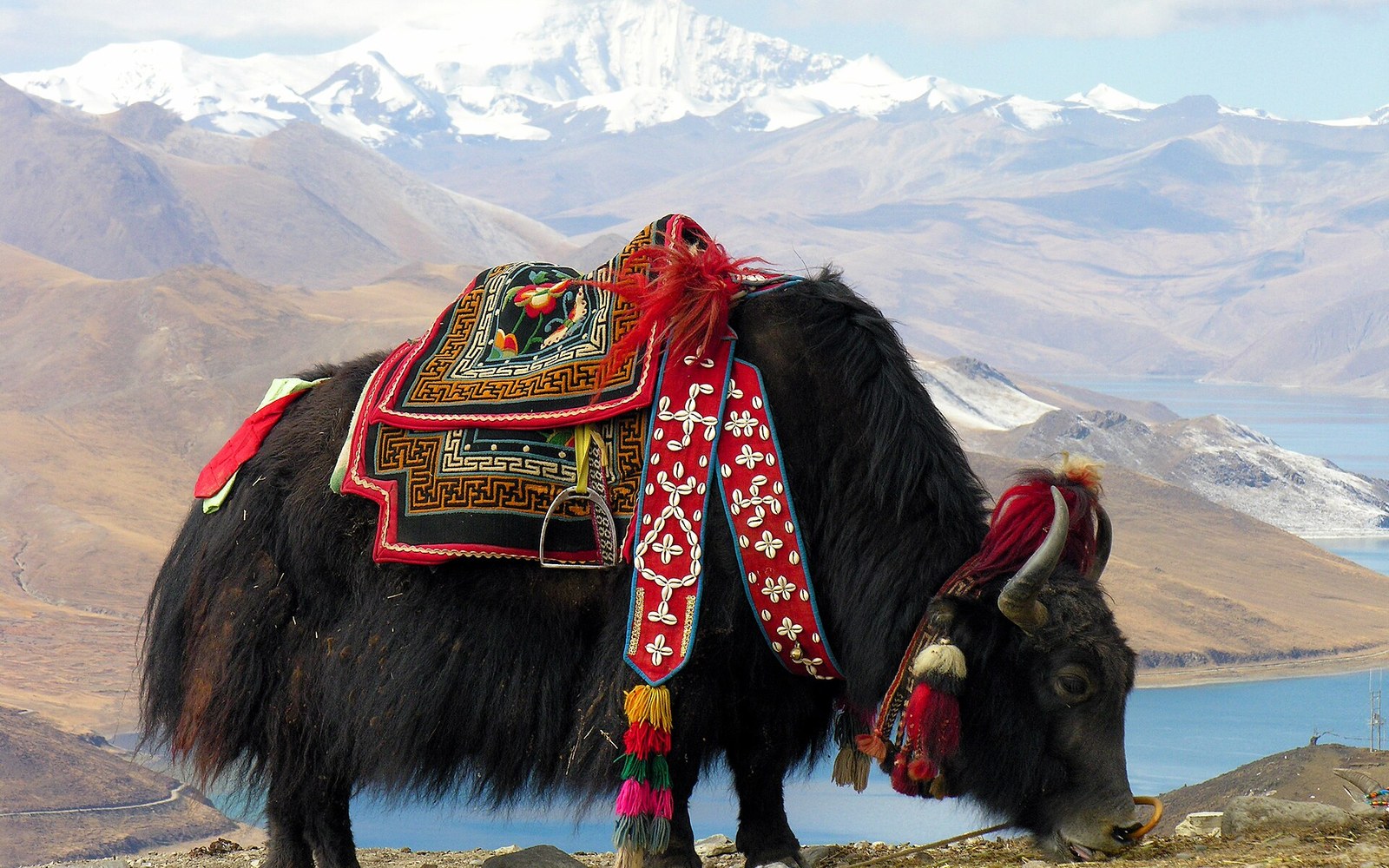
Key material properties
| Shelf life | months to years; stable at high altitude and low humidity |
| Fuel cost | zero at point of eating; all energy input at the roasting stage |
| Kit required | a pouch of flour, a bowl, a source of liquid |
| Caloric density | high; fat from butter tea boosts energy delivery |
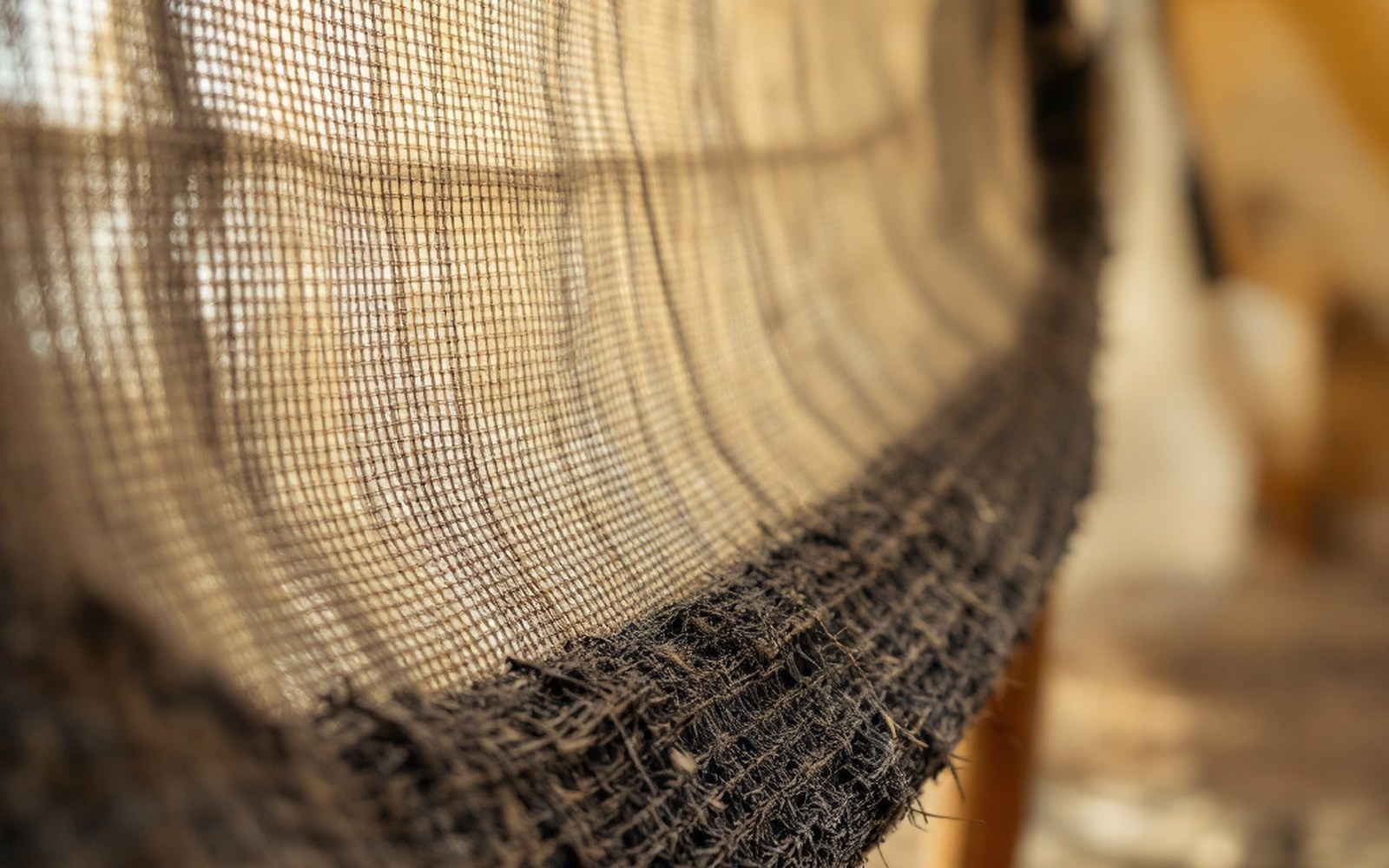
Woven from yak hair, the cloth swells when wet and closes its own weave, so a loose fabric becomes a rainproof roof. Read the entryProTibet picture library
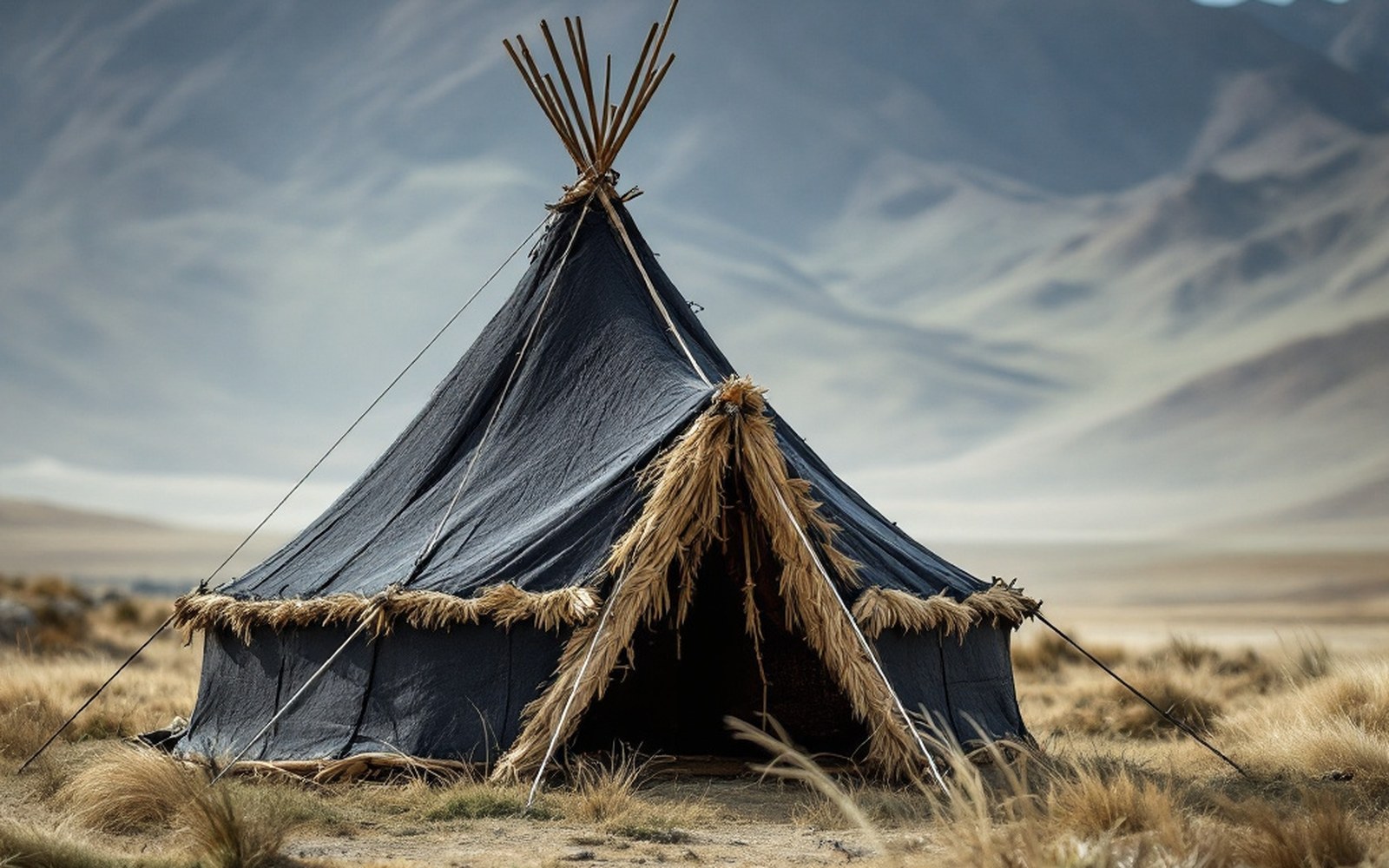
Yak-hair cloth swells when wet and closes its own weave, so a loose fabric becomes a rainproof roof.ProTibet picture library