The Yak
One animal carries the load, provides the tent, fuels the fire, gives the milk, and eventually feeds the table — on the Tibetan plateau, no other domesticate comes close.
Transport, wool, milk, hair for tents and dung for fuel in a place with no wood — the whole economy rests on one animal.
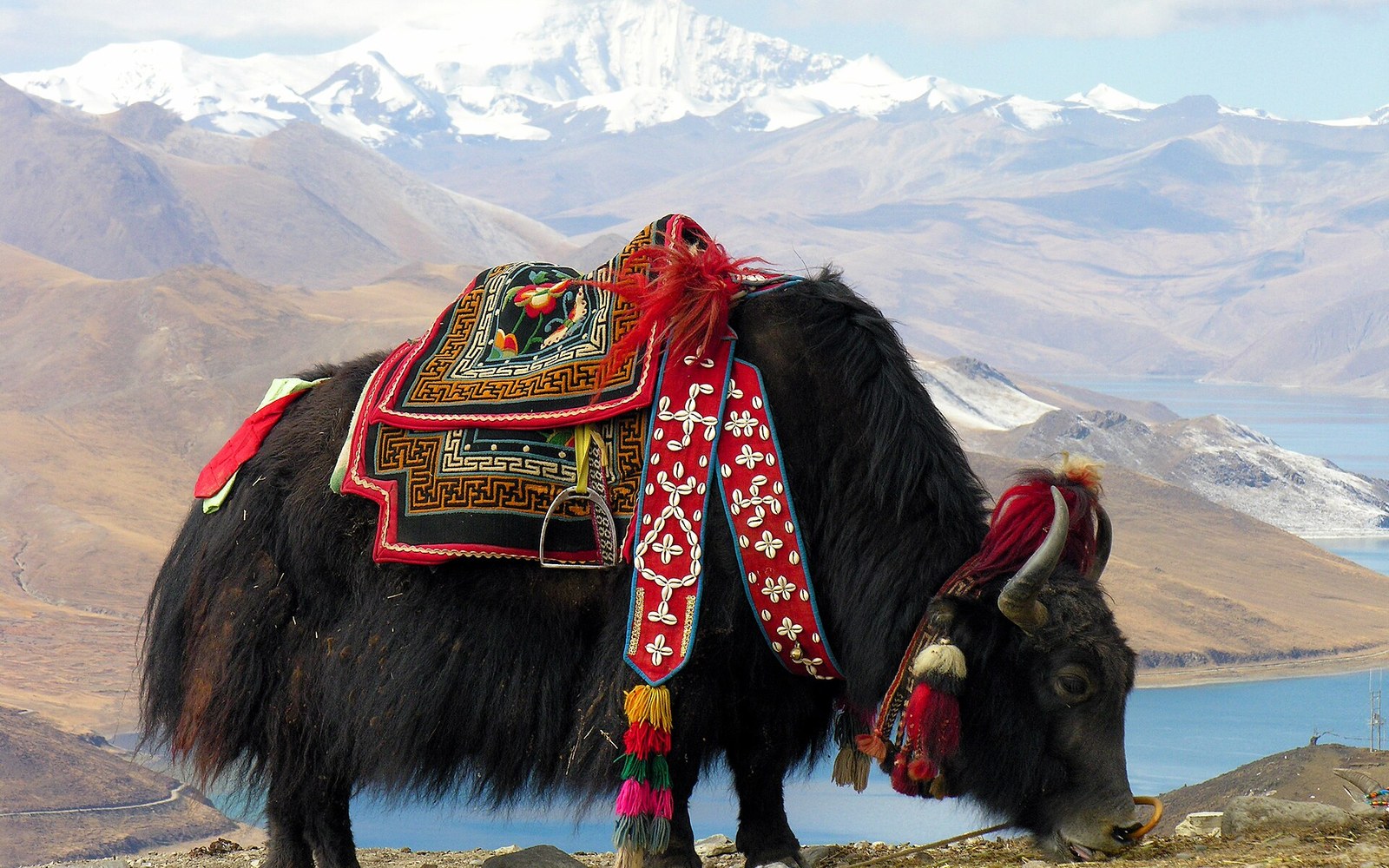
Transport: pack loads of 60–130 kg across high passes; the backbone of plateau trade routesPhoto: Bos grunniens at Yundrok Yumtso Lake · Wikimedia Commons
01Built for Altitude
Bos grunniens is not an adapted animal; it is an original.
The wild yak (drong in Tibetan) still ranges the Chang Tang, the high northern plateau above 4,500 metres, where winter temperatures fall below −40 °C and the air holds roughly half the oxygen available at sea level. The domestic yak — smaller, more variable in colour, bred over several millennia — descends from that wild stock and retains its essential physiology: a massive lung capacity, a heart proportionally larger than any lowland cattle breed, haemoglobin with an unusually high oxygen affinity, and a rumen that can extract nutrition from dried grasses and sedges too sparse and tough for any other large herbivore. The thick double coat — coarse outer guard hair over a dense fine undercoat — functions as insulation so effective that a resting yak in a snowstorm accumulates a cap of unmelted snow on its back.
Below about 3,000 metres the yak begins to fail: it overheats, becomes susceptible to disease, loses condition and fertility.
The plateau that would kill most livestock is exactly where the yak excels. This inverse relationship between altitude and animal performance is one of the reasons the Tibetan economy took the form it did — a vertical specialisation that trades across altitude bands rather than trying to replicate lowland agriculture at height.
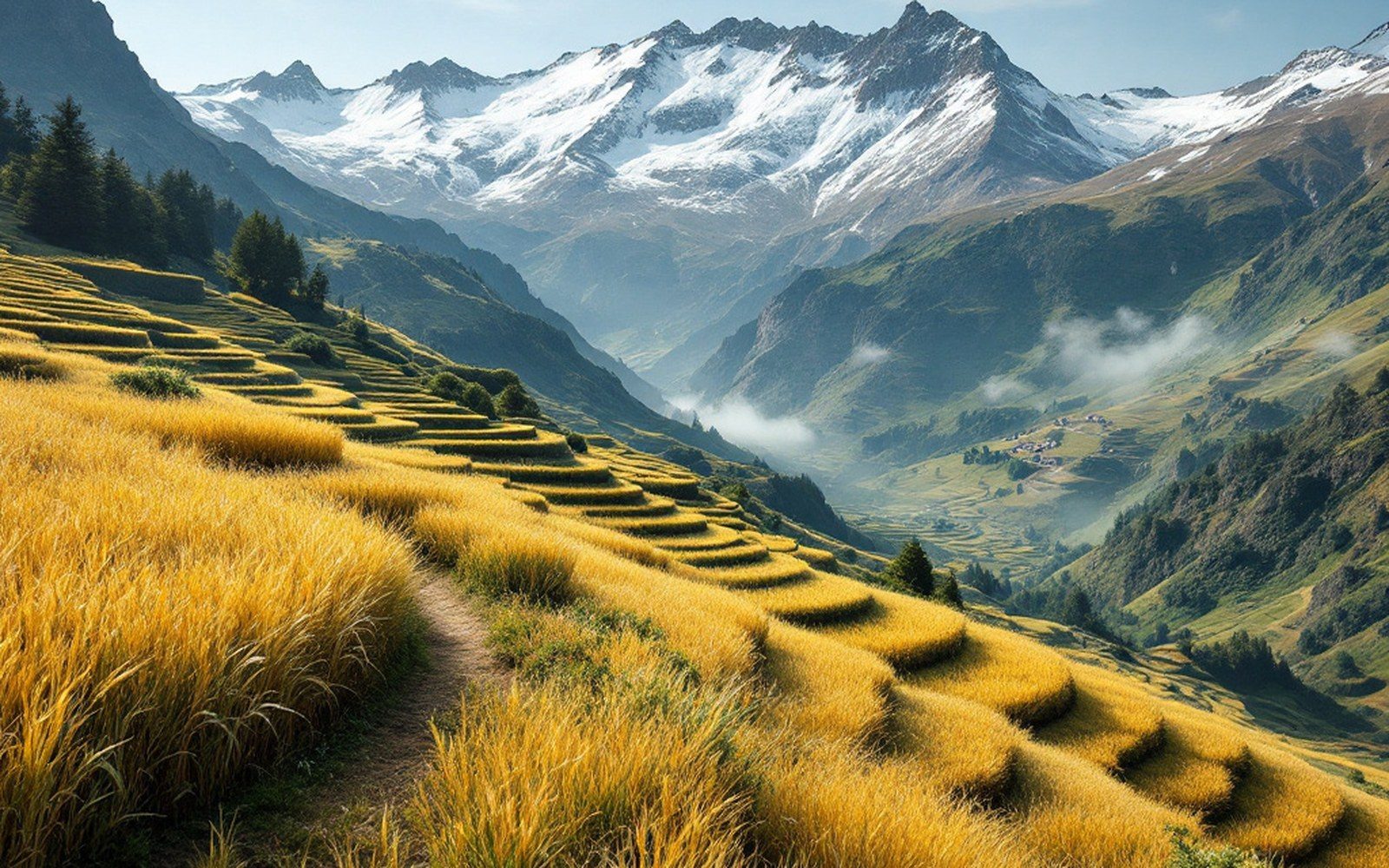
Barley ripens higher than any other cereal, and the altitude at which it stops is the altitude at which settled farming stops. Read the entryProTibet picture library
02Everything the Animal Gives
The accounting of what a yak provides begins with transport.
A loaded pack yak carries between 60 and 130 kilograms depending on terrain and the animal's condition, and it does so across passes that would turn wheeled transport back. The great salt-and-wool trade routes of the interior — drokpa (nomadic pastoralist) camps moving seasonally, caravans connecting the northern lakes with the Yarlung Tsangpo valley — were yak-dependent in both directions. Salt from the Chang Tang lakes moved south on yak back; grain, tsampa, and trade goods returned north on the same animals. The yak is also the animal that the nineteenth-century pundits used as cover: Nain Singh Rawat and Kishen Singh moved through the plateau in the guise of traders, their instruments concealed in luggage loaded onto pack animals that any caravan guard would recognise and largely ignore.
Milk comes next, and it is richer than cow's milk — typically around 6 to 7 percent fat — which makes it well suited to the production of butter.
Yak butter is not a luxury on the plateau; it is a caloric staple, added to tea, used to preserve manuscripts, burned in lamps, and worked into the pigment binders used in wall painting. The churned residue yields a soft fresh cheese. Neither product travels far before spoiling, but both are dense enough in energy to matter enormously at altitude where food must compensate for the metabolic cost of cold.
What the animal provides — at a glance
| Transport | pack loads of 60–130 kg across high passes; the backbone of plateau trade routes |
| Milk and butter | 6–7% fat milk; butter used in food, lamps, manuscript preservation and pigment |
| Fibre | coarse outer hair for tent cloth; fine undercoat (khullu) for clothing and trade |
| Dung | primary cooking and heating fuel across the treeless northern plateau |
| Hide and meat | leather for boots, bags and boats; wind-dried meat stored through winter |
The fibre is twofold. The coarse outer hair — long, dark, strong — is the primary material for the black tents that the drokpa use across the northern plateau: woven in narrow strips on simple looms, the cloth swells when wet, closing its own weave against rain and wind, and sheds snow by its own weight. The fine undercoat, combed or collected during the spring moult, is the khullu fibre that has long attracted commercial interest for its softness; it sits closer in character to cashmere than to conventional wool. Both fibres come from the same animal in the same season, separated by comb and hand.
Dung is the fuel of a treeless plateau.
Dried yak dung burns slowly and hot enough for cooking and for warming a tent or a low stone house. In the Chang Tang and across the higher elevations of the Kailash range, there is simply no alternative: no wood grows, coal is inaccessible, and the plateau wind that would carry smoke also dries the fuel in open air within days of collection. Stacked cakes of dung against a stone wall are a form of stored energy as legible as firewood, and the supply is continuous as long as the herd is present.
Finally, the animal itself is meat and hide.
Yak are not slaughtered casually — the herd is capital — but old or injured animals, and animals culled at the onset of winter when fodder runs short, provide leather for boots, bags, and the coracle-like gowa boats once used on the Yarlung Tsangpo and its tributaries, and meat that is wind-dried at altitude into a product that keeps through the winter without salt or processing beyond the cold.
03The Animal in Practice
Domestic yak management on the plateau follows an altitudinal calendar.
In summer, herds graze the high pastures — the alpine meadows above the valley floors — and families follow them, living in the black-hair tents. In autumn the herds descend to lower ground and the stone winter enclosures. The dzo, a yak-cattle hybrid, is sterile in the male but tolerates slightly lower elevations and pulls a plough in the agricultural valleys where the pure yak is too large and too cold-adapted to work reliably: the Yarlung Tsangpo valley and the Gyantse and Shigatse basins use the dzo as their working draught animal in the fields, while pure yak handle the passes above.
The wild population from which all of this derives has contracted sharply over historical time and is now classed as vulnerable; survey data collected across the Chang Tang places the surviving wild population at well under ten thousand animals, a fraction of what nineteenth-century travellers described. The domestic population, by contrast, numbers in the millions across the plateau and into adjacent highland regions.
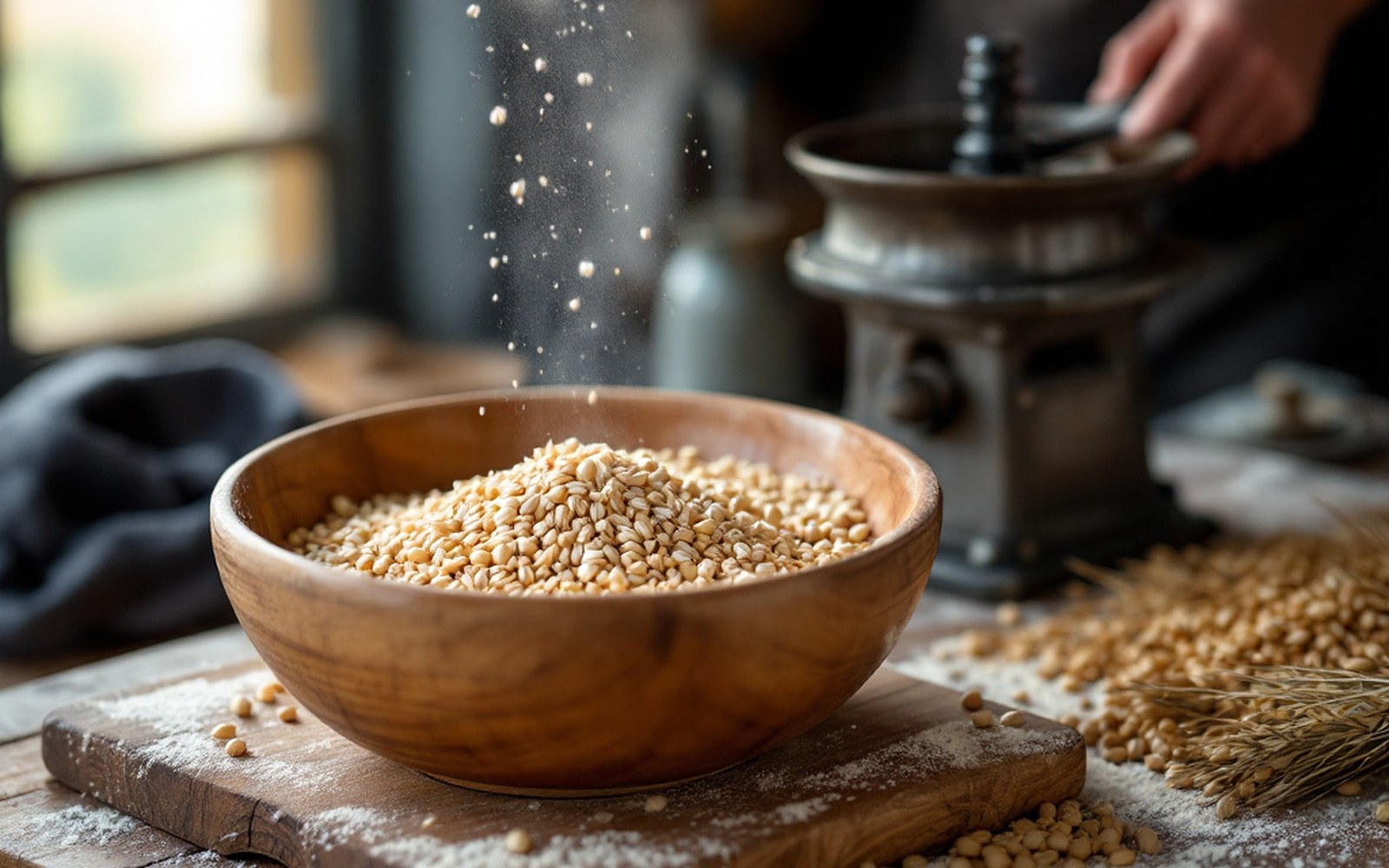
Roasted barley flour keeps, needs no cooking and can be eaten anywhere, which is why it is the staple rather than bread. Read the entryProTibet picture library
04The Measure of Dependence
No single figure captures the depth of the yak's integration into plateau life better than the list of things it displaces: there is no need for a separate fuel source, a separate textile fibre, a separate draught or pack animal, a separate dairy animal, or a separate leather source if the herd is large enough. What the Survey of India surveyors mapping the plateau in the 1860s and 1870s observed — and what their field notes, now held at Dehradun and summarised in the records of the Royal Geographical Society, record — was an economy of remarkable coherence, in which a single domesticate underwrote almost every material need above the barley line. The altitude that made agriculture marginal also made the yak indispensable, and the two facts are not separate: they are the same fact, seen from different sides of the same cold, thin air.
Key distinctions
| Wild yak (drong) | the ancestral form, still present in small numbers on the Chang Tang; classified as vulnerable |
| Domestic yak (Bos grunniens) | smaller, colour-variable; suited to above roughly 3,000 m |
| Dzo | yak-cattle hybrid; sterile males used as draught animals in the lower agricultural valleys |
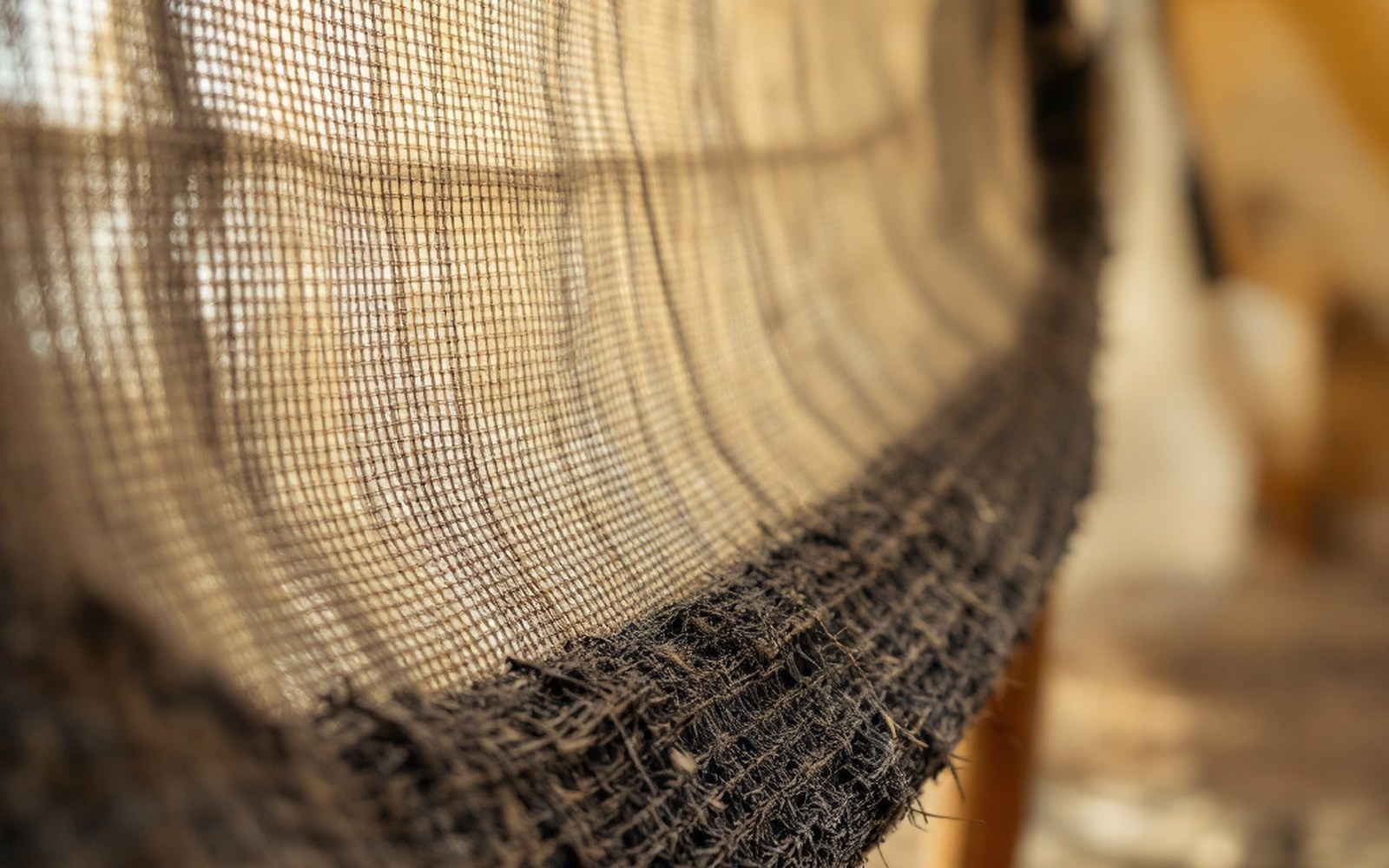
Woven from yak hair, the cloth swells when wet and closes its own weave, so a loose fabric becomes a rainproof roof. Read the entryProTibet picture library
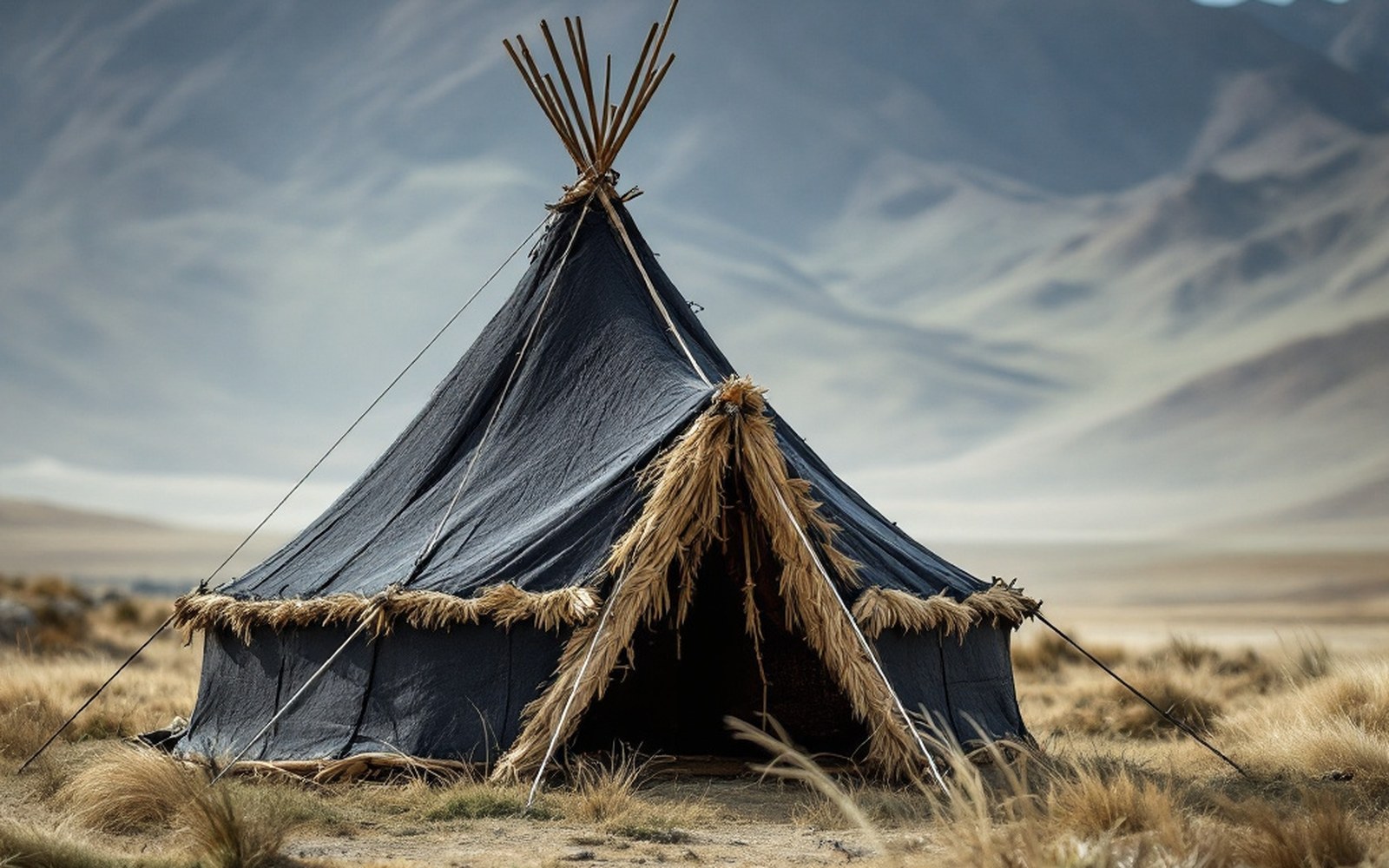
Yak-hair cloth swells when wet and closes its own weave, so a loose fabric becomes a rainproof roof.ProTibet picture library