Mineral Pigments
The colours of a Tibetan painting are ground from stone, and the painter is, first of all, a mineralogist.
Ground azurite, malachite, cinnabar and orpiment, bound in animal glue — the colours are stones before they are paint.
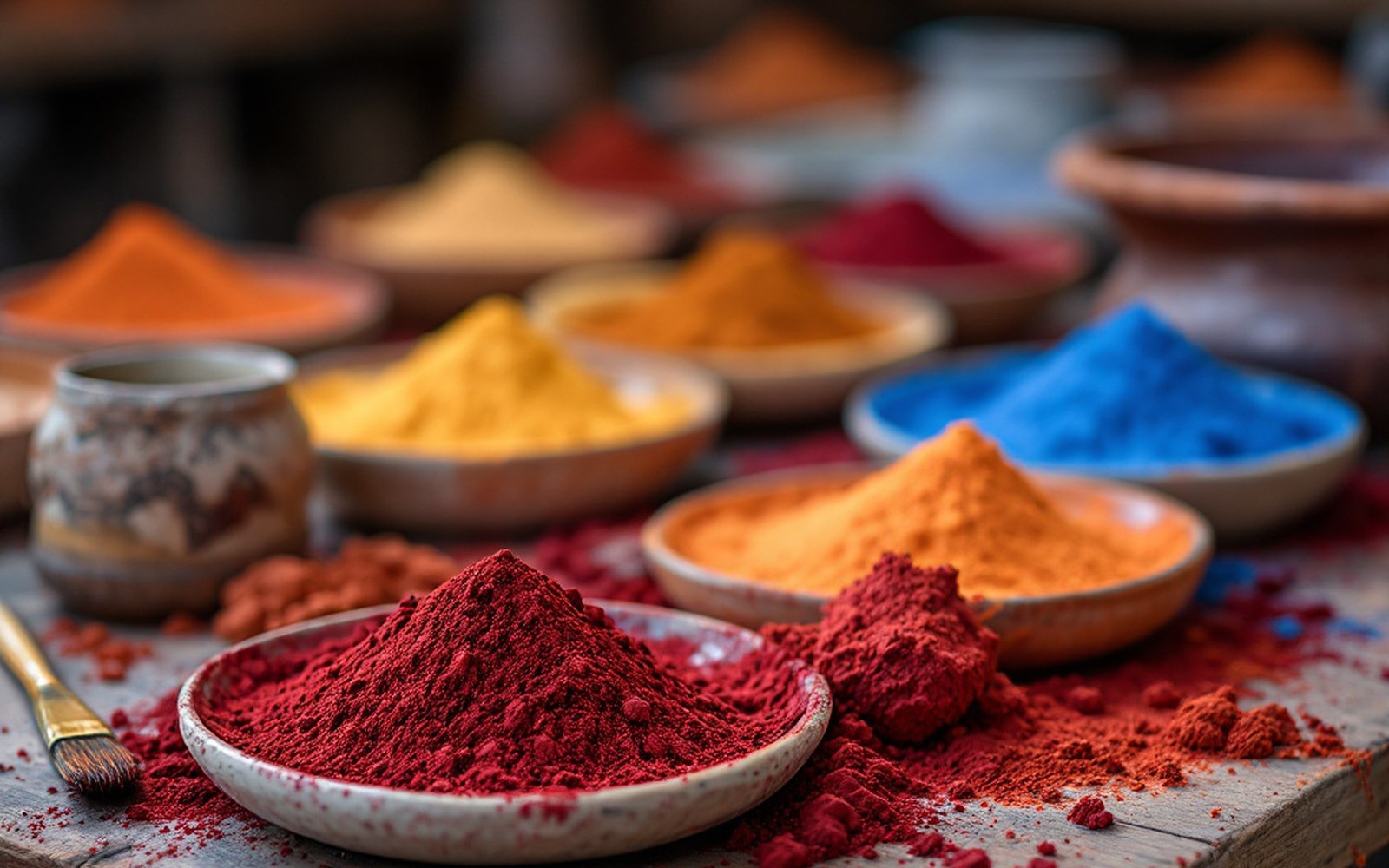
Azurite: copper carbonate blue; particle size controls depth of colourProTibet picture library
01Stone Before Paint
Every pigment in the Tibetan painter's kit has a geological address.
Azurite — deep copper-blue, the colour that covers the sky registers of so many thangkas — is a secondary copper carbonate that forms where copper ore has been oxidised near the surface, typically in the oxidation zones of porphyry copper deposits. Malachite, its green sister mineral, is the same process one step further: copper carbonate hydroxide, banded in concentric rings, recognisable in the raw rock before it is ground. Both minerals occur in the same ore bodies, and Tibetan painters sourced them from the same geological belt that runs across the plateau's southern and western margins, the same ranges that carry copper and turquoise deposits through the Kailash range and into the Yarlung Tsangpo valley.
The grinding and levigation of azurite and malachite is the most technically demanding step in palette preparation.
The raw mineral is crushed in a stone mortar, then washed repeatedly in water — a process called levigation — which separates particles by weight. Coarsely ground azurite reads as a deep, saturated blue; the same mineral ground finer turns paler, almost turquoise. This is not degradation but physics: finer particles scatter more light. A painter who wanted a deep blue preserved the coarser fraction, reserving the finely ground material for pale skies or highlights. The same particle-size logic governs malachite: coarse gives a rich midtone green, fine gives a delicate celadon. The painter, in other words, had not one blue and one green but a register of them, all from the same two stones, differentiated entirely by the duration and pressure of grinding.
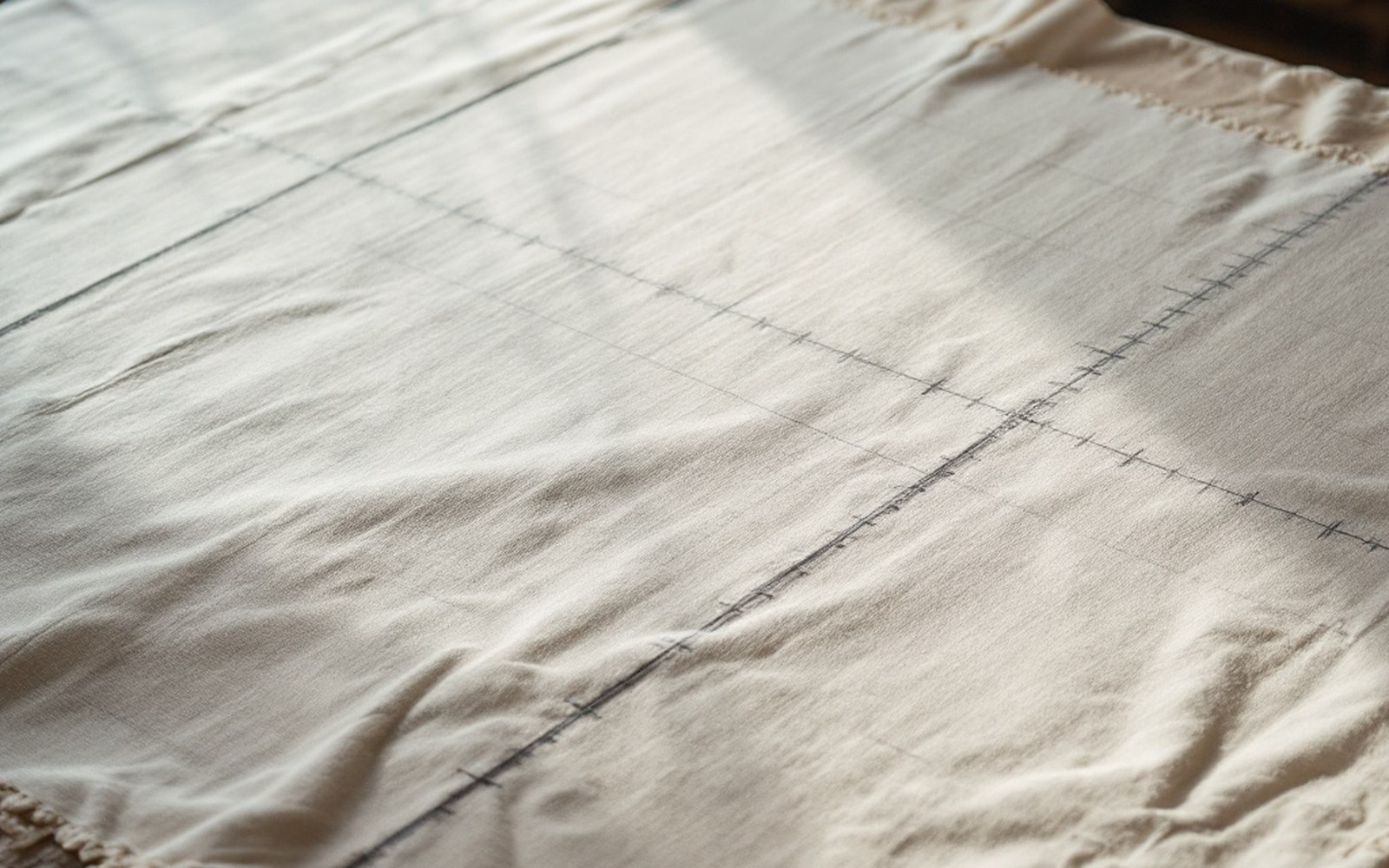
A painted figure is set out on a ruled proportional grid before any colour is laid, so the drawing is a measurement rather than a sketch. Read the entryProTibet picture library
02Red, Yellow, and the Poisonous Pair
Cinnabar — mercury(II) sulphide, HgS — provides the most saturated red in the palette.
The mineral is vermilion when ground fine, approaching orange-red, and was the dominant red in Tibetan, Chinese and Indian painting traditions alike for centuries before synthetic vermilion became available. The Tibetan plateau lies within reach of several Asian mercury deposits, and cinnabar was traded across the Himalayas from Chinese sources, particularly from Guizhou and Hunan provinces, as well as from smaller deposits within the region. Its weight is diagnostic: a painter testing an unfamiliar red could feel the density of genuine cinnabar against adulterated material. Cinnabar is also toxic — mercury compounds accumulate in tissue — and the painters who worked with it daily over decades would have carried that cost in their bodies, even if the tradition itself did not frame the hazard in those terms.
Orpiment, arsenic trisulphide (As₂S₃), gives the palette its primary yellow: a vivid, resinous, almost translucent lemon-gold that no plant dye can replicate at equivalent saturation.
Its companion mineral, realgar (arsenic monosulphide, As₄S₄), shifts the same arsenic chemistry toward orange-red, and the two often occur together in hydrothermal vein deposits. Both are acutely toxic arsenic compounds, and historical Tibetan sources on painting technique note that orpiment is incompatible with lead white and with certain copper-based pigments — not because the writers understood the chemistry, but because they had observed the results: orpiment in contact with lead compounds produces black lead sulphide, destroying both colours. This empirical incompatibility table is one of the more remarkable bodies of technical knowledge in pre-modern painting traditions anywhere.
Pigment identities
| Azurite | copper carbonate blue; particle size controls depth of colour |
| Malachite | copper carbonate green; same ore body, same size logic as azurite |
| Cinnabar | mercury sulphide; primary red, traded from Chinese sources |
| Orpiment | arsenic trisulphide; primary yellow, incompatible with lead compounds |
| Realgar | arsenic monosulphide; orange-red, co-occurs with orpiment |
| Lead white | basic lead carbonate; primary white, darkens near sulphur |
| Iron ochres | iron oxides; most stable pigments in the palette |
Lead white — basic lead carbonate — provided the primary white and was used as a base for optical mixing and in flesh tones.
It too is toxic, and it darkens in the presence of sulphur compounds, which is why lead whites in very old thangkas sometimes read grey where they once read bright. Red ochre and yellow ochre — iron oxides, the most stable pigments in any palette anywhere — served as secondary colours and as underdrawing materials. They are essentially inert and survive millennia without change, which is why wall paintings at sites across the plateau's western margins, at Tabo and at Alchi, still read their iron oxide passages clearly even when the copper-based colours have altered.
03The Binder and the Grid
Ground mineral pigment is not paint until it is bound.
The binder in Tibetan painting is animal glue — typically hide glue or fish glue — dissolved in warm water to a working consistency. The glue concentration matters enormously: too weak, and the pigment sits on the surface without adhesion and will dust off; too strong, and the paint layer cracks as it dries, because the rigid glue matrix cannot accommodate the shrinkage of mineral particles. Experienced painters calibrated this by feel and by the appearance of the dried surface, not by measurement. Some traditions also introduce a small quantity of ox gall — bile from cattle — as a surfactant, reducing surface tension so that the paint flows onto the sizing without beading.
The ground on which all of this is applied is typically a cotton or linen cloth that has been coated with a mixture of chalk or gypsum and diluted glue, then burnished smooth with a stone or shell.
The proportional grid system used to set out a figure — establishing the head unit and dividing the body into canonical intervals — is drawn directly on this sized surface before any pigment is applied. The grid is functional scaffolding, not decoration, and it is erased, visually if not physically, by the successive layers of paint that cover it.
The International Dunhuang Project has carried out pigment analysis on Tibetan-tradition paintings and manuscripts recovered from the Mogao Caves at Dunhuang, confirming the presence of azurite, malachite, cinnabar, orpiment, realgar, lead white and red ochre across a body of work spanning the ninth to the eleventh century. These are the same materials described in later Tibetan treatises on painting technique, and X-ray fluorescence analysis of thangka pigments published by museum conservation departments has confirmed their continuity into recent centuries. The palette is conservative not from lack of experiment but because the materials work: stone pigments bound in glue, on a chalk-sized cloth, in a dry climate at altitude, are among the most durable painting systems ever devised.
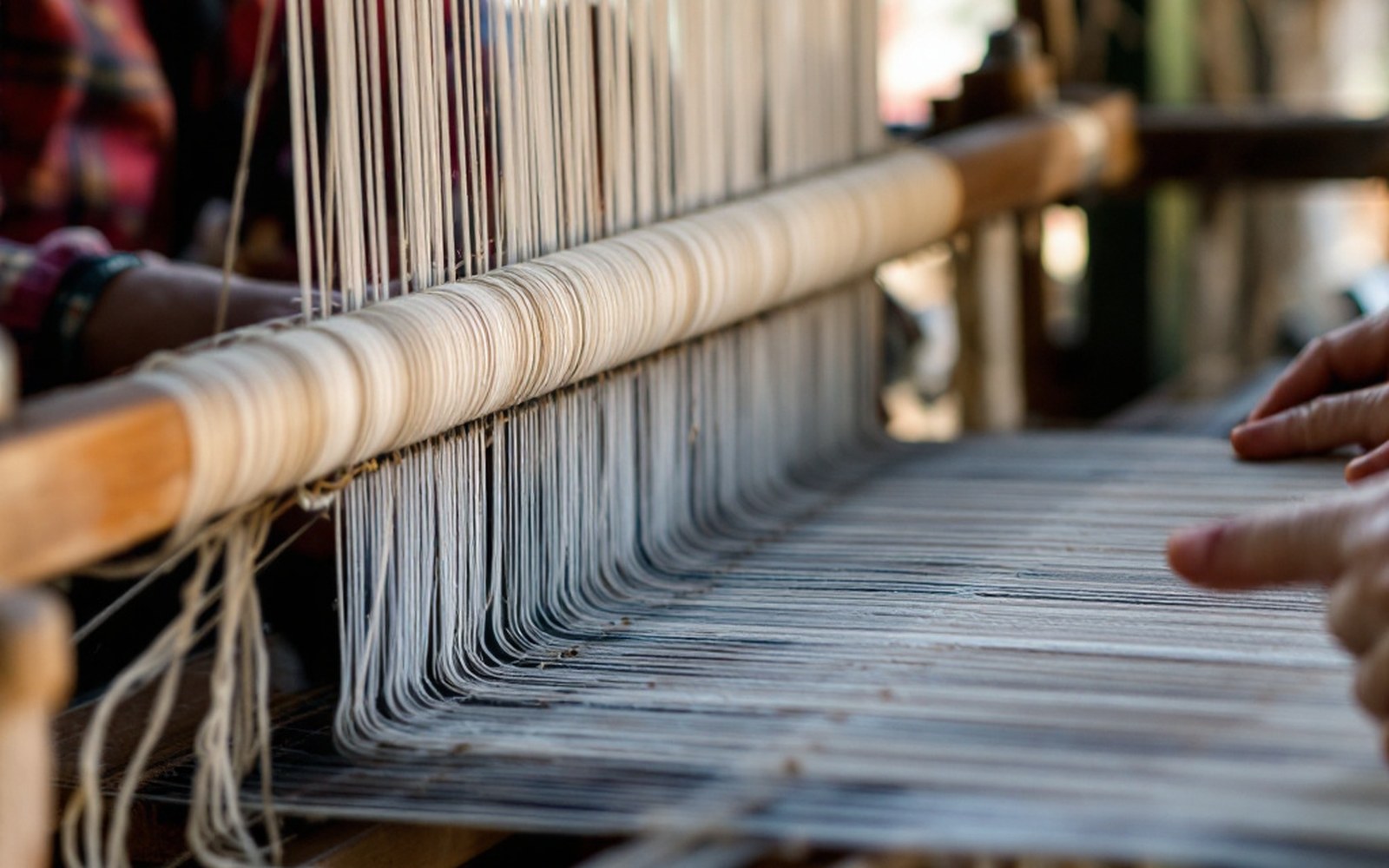
Backstrap and frame looms produce narrow cloth that is joined in strips, which is why the patterning runs the way it does. Read the entryProTibet picture library
The incompatibility rule
- Orpiment + lead white → black lead sulphide: the reaction was known empirically long before chemistry named it; Tibetan technical texts encode it as a rule of practice
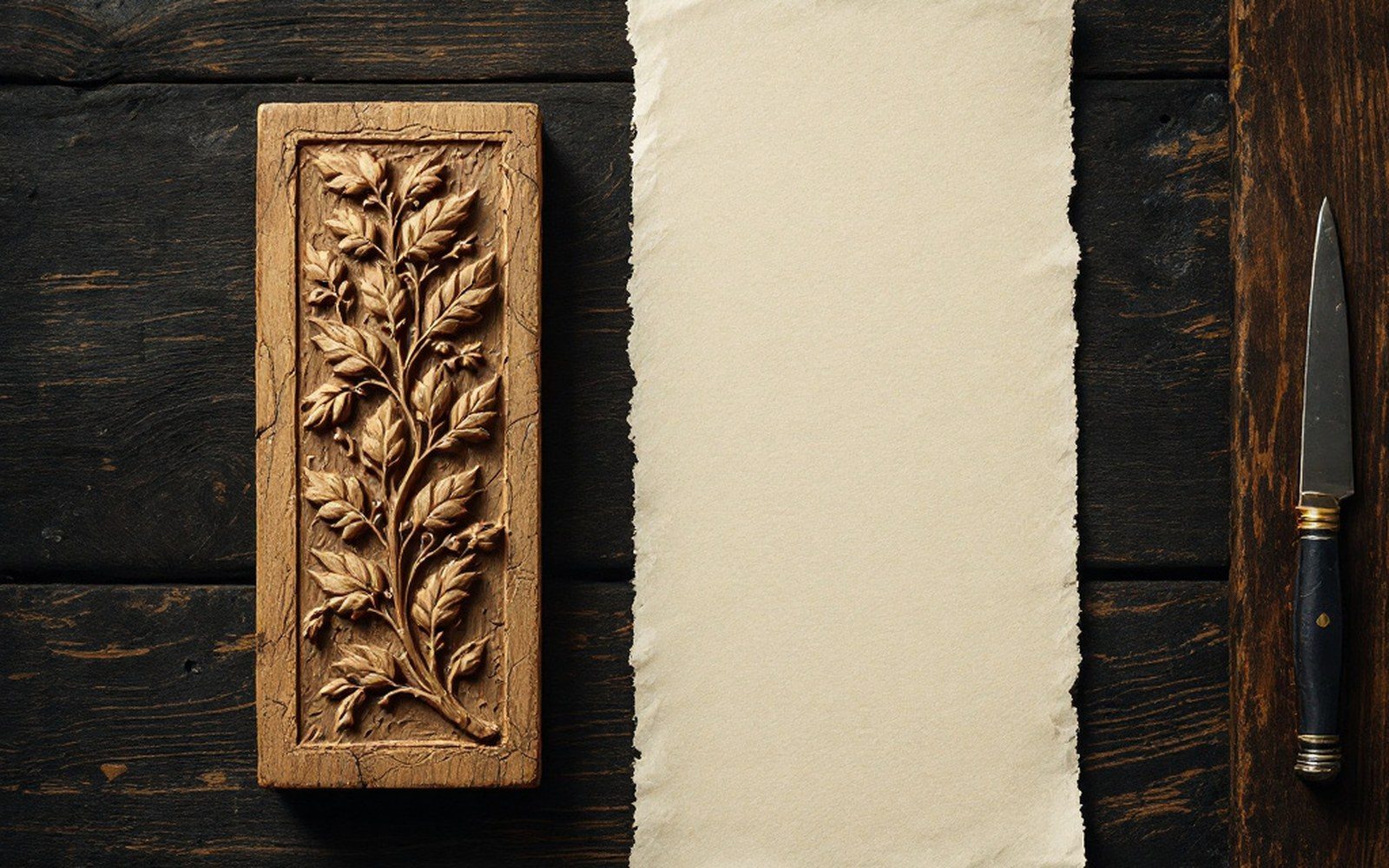
Text was printed from carved blocks onto long loose leaves, one block to a page, and the blocks were kept. Read the entryProTibet picture library
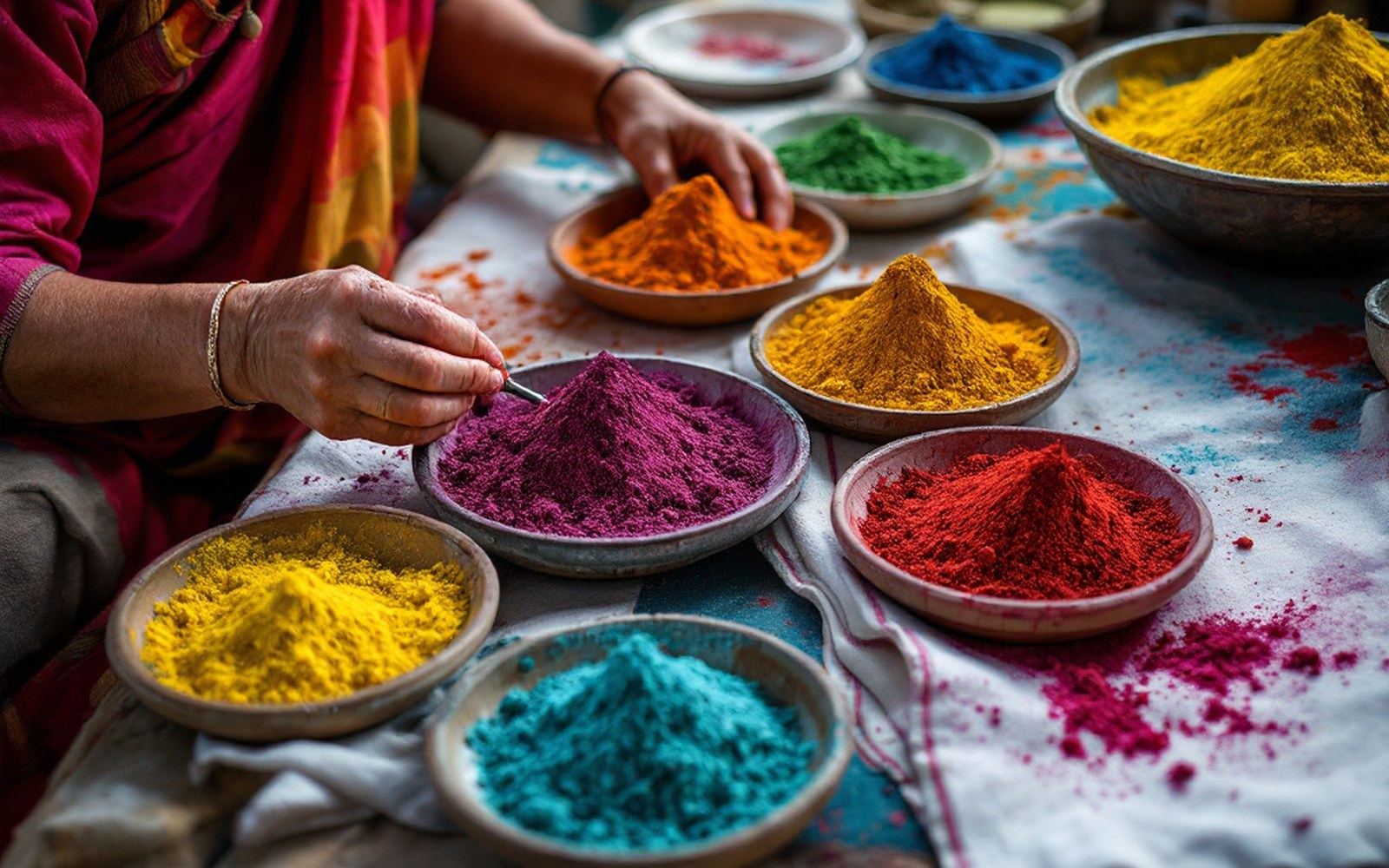
The colours are stones before they are paint — azurite, malachite, cinnabar and orpiment, ground and bound in hide glue.ProTibet picture library